

After moving away from the traditional model of a pro shop run by a self-employed professional, Hull Golf Club has brought its golf operation in-house, giving the club greater control over finances, retail and the member experience. Director of golf Steve Robins explains how the change is supporting investment, growing custom fitting and shaping the club’s future.
The landscape of the golf industry is always evolving. How have golf operations at Hull adapted to change in recent years?
It has been clear for several years that the ‘middle tier’ of golf clubs faces the biggest challenge. Inflation across all cost lines is proving increasingly difficult to pass on to the typically younger cross-section of the membership, who also face rising costs in their day-to-day lives.
Due to previous operational and financial challenges, Hull Golf Club completely changed its business model, moving from the traditional pro shop run by a self-employed professional to a golf operation owned and managed by the club.
Under this model, whilst retail sales are one measure of success, our priority has been to improve the overall quality of the member experience while keeping expenditure and cash flow under control. This has helped put the club on a stronger footing.
We established clearer management responsibilities, strengthened financial controls and made golf operations more efficient, alongside targeted investment in the course and greenkeeping infrastructure. The next planned expenditure will focus on renewing the club’s fleet of greens machinery.
My priority now is to help build on that progress, ensuring the standards members experience today are supported by decisions that protect the club’s future.
When did you join the TGI Golf Partnership and what made you decide it was the right fit for the golf operation?
We joined the TGI Golf Partnership in 2023. The appeal was access to practical support and the community of professionals facing similar challenges. Over time, I have come to appreciate just how valuable that community of partners and suppliers can be.
I would be the first to admit that I did not fully appreciate the breadth of support available when I joined. I was lucky enough to be selected as a Titleist TGI Partner of the Year last year and was invited to visit the brand’s facilities in Boston with fellow partners and members of the TGI team. Spending time in the US with them and having more detailed interactions gave me a much clearer understanding of what the partnership could offer.
Their warmth, openness and willingness to help made a lasting impression, giving me the confidence to seek advice and involve them more closely in developing our golf operation.
How has becoming a TGI partner benefited you as a PGA professional and in managing the retail operation?
The greatest benefit is having experienced people to consult when considering an investment, improving a service or exploring a new opportunity. As director of golf, I value the advice and shared knowledge that allow me to improve what we can offer our members.
I now make fuller use of the app and the wider support network. The relationships with suppliers and fellow partners provide an opportunity to exchange ideas, learn from experience and make better-informed decisions.
Receiving a nomination for TGI Associate Partner in 2024, after just one year as a partner, was particularly encouraging. It meant a great deal to have the work we were doing at Hull recognised so early in that relationship.
The day of a club professional can involve wearing many hats. How do you manage your day?
My role as director of golf combines responsibility for the daily operation with a broader contribution to the club’s future. A typical week can encompass coaching, custom fitting, junior development and management of the club diary, as well as finance meetings, greens and handicap committee work, staff training, course development and corporate relationships.
Clear priorities and a capable team are essential. I am fortunate to work with colleagues whom I trust and whose contribution allows me to balance the immediate needs of the operation with longer-term planning.
The discipline is to make time for both. Members should feel the benefit of good leadership in the service they receive each day, while the club continues to make progress behind the scenes. Remaining visible and approachable is an important part of that responsibility.
With a constant flow of new golf products, how do you manage stock to serve the needs of members and visitors?
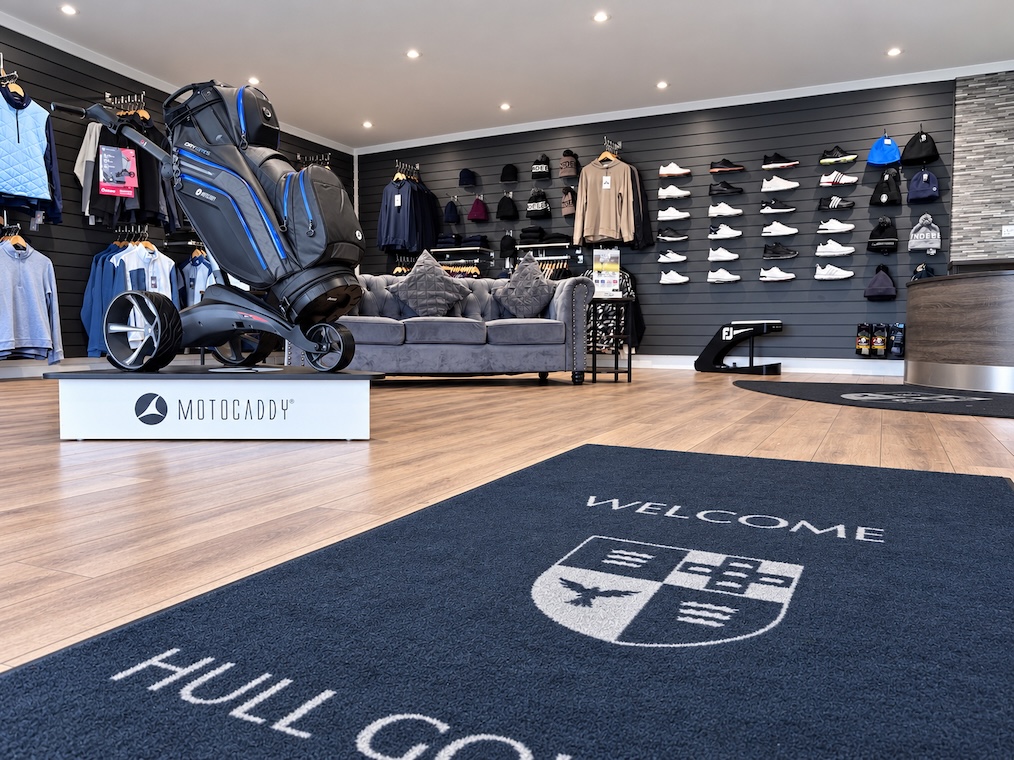
As custom fitting has grown, I have deliberately shifted our sales focus towards clubs and specialist services, with less capital committed to clothing stock. That decision reflects where customer demand is growing and where our expertise adds the greatest value.
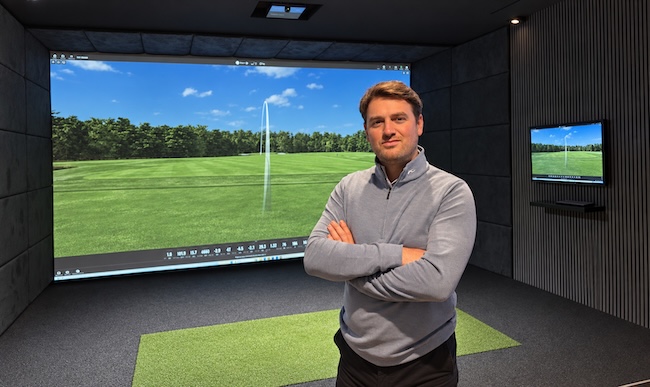
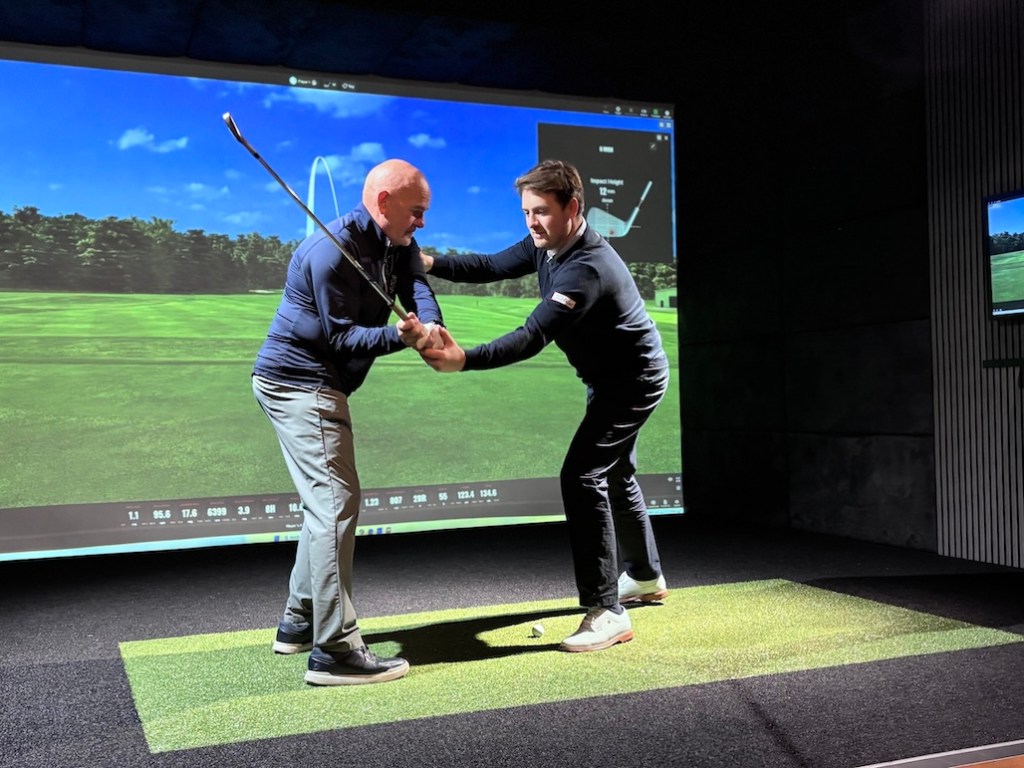
The investment in the Trackman studio, alongside Titleist’s investment in my development through training and a recent visit to their US headquarters in Boston, has helped us almost double our club sales. It reinforced the case for investing further in custom fitting, club building and expert analysis, supported by a more selective clothing range.
Stock control remains central to that approach. I work closely with the team on budgets, margins and stock turn, keeping purchasing aligned with demand. The aim is to give members and visitors a stronger specialist service while reducing the amount of capital tied up in slower-moving stock.
What are you doing to support junior golf and introduce kids to the sport?
Whilst the lack of a driving range has always presented challenges, we have grown junior membership to its highest level in recent years. Establishing a regular connection between the club and local children has been central to that progress.
Through our links with neighbouring schools, we deliver weekly golf sessions as part of their PE curriculum. This introduces children to the game in a familiar setting and has helped bring new junior members to the club.
It is a rewarding part of the role. I want the children we introduce to golf to build the confidence, friendships and enjoyment that keep them playing for years to come. For me, the real measure of success is seeing them grow up with the game and remain part of club life.
Are you actively trying to attract more women to golf?
Yes. Women’s golf is an important part of Hull’s future, and our ladies’ section continues to grow. We introduced a pathway combining coaching with a discounted five-month membership and access to selected tee times, giving newcomers an opportunity to build confidence and get to know the club.
The programme was designed to help participants become part of the ladies’ section before committing to full membership, with the joining fee waived for those who continued.
Take-up was below my expectations, so I am reviewing the approach. A worthwhile idea still needs to work for the people it is intended to serve. Understanding the barriers to participation will help us refine the offer and build on the welcome provided by our existing ladies’ section.
Do you have programmes, such as academy membership, to make it easier for beginners to enter the game?
Space is our main constraint. Hull does not have room for a full driving range, so developing an academy requires us to think carefully about how we use the facilities available.
Monthly subscriptions to the indoor Trackman studio give golfers regular access to the facility and an opportunity to get to know Hull before considering club membership. Some subscribers have subsequently become members. For those new to golf, our school PE sessions introduce children to the sport, while introductory coaching helps beginners learn the skills to start playing.
Expanding that provision remains an ambition. Any future development must offer a worthwhile experience, make practical use of our space and be financially sustainable.
With technology and expectations evolving, what additional services do you provide to add value for golfers?
The indoor Trackman swing studio has been my most significant personal investment in the facilities at Hull. Given the limitations of our outdoor practice space, it offered a practical way to improve coaching and custom fitting while broadening access to the club.
The studio has helped grow our custom-fitting service beyond the membership and generated additional income through monthly subscriptions. It has also supported the year-on-year growth of my ambassador partnership with Titleist, contributing to a significant personal and professional milestone: receiving TGI Titleist Partner of the Year 2025.
That recognition was especially meaningful because of the work behind it. The investment was made with a clear purpose: to improve the quality of service and specialist advice available to golfers at Hull and external clients.
Technology adds most value when it helps someone to understand their game and make a confident, informed decision. Professional expertise is what turns the data into something useful for the golfer.
When did you turn professional, and what have been your career highlights, both on and off the course?
I turned professional in 2017, having reached the top 300 in the World Amateur Golf Ranking, represented England Golf at under-19 level and helped my county win the National County Finals. Representing my country and county remains a source of real pride.
As a professional, I reached the top 1000 in the Official World Golf Ranking, recorded five top ten finishes on the PGA EuroPro Tour and won eight times as a PGA Professional.
I’ve also reached Final Qualifying for The Open five times, frustratingly missing out in a play-off for a place at Royal Troon in 2016.
I still very much enjoy playing and continue to have ambition, but I realised in 2024, when I qualified for the second stage of DP World Tour Qualifying School in Spain, that it is impossible to combine my current role with being sharp enough to compete with full-time professionals dedicated to tournament golf.
Aside from my playing career, the TGI Associate Partner nomination in 2024, after just one year as a partner, and winning TGI Titleist Partner of the Year 2025 are highlights. Both recognised different aspects of my career: the quality of our services and the relationships developed within the industry. My appointment as director of golf, after three years as head professional, was another proud and pivotal milestone and an opportunity to contribute wholeheartedly to the future of Hull Golf Club.


Leave a Reply