

LIV Golf’s recent turbulence has raised significant questions about the sustainability of the sovereign wealth backed project.
For a competition that has spent billions of dollars on disrupting professional golf, the latest developments are hugely concerning.
The end of the blank cheque era
The central issue facing LIV Golf is not whether it will continue in the short term, but how it will be sustained in the long term.
Backing from the Public Investment Fund (PIF) has allowed LIV Golf to operate without traditional financial constraints since its launch in 2022, but recent signals point towards a recalibration.
The PIF’s updated strategy emphasises efficiency, governance and measurable returns, which places LIV in a different category of scrutiny.
LIV chief executive officer Scott O’Neil’s insistence that the 2026 season will proceed ‘at full throttle’ was paired with a more revealing admission that raising money is ‘probably’ required.
That shift in language matters because it reframes LIV from a fully insulated project into one that must justify its existence in commercial terms.
LIV’s early success in forcing change across the sport is undeniable, but disruption often does not create sustainability.
The next phase will be determined by whether LIV can demonstrate financial discipline alongside growth.
A franchise model under real pressure
Much of LIV’s long-term strategy has been built around its team-based structure, with executives repeatedly outlining ambitions to develop 13 billion-dollar franchises.
The concept is simple in theory, with teams acting as independent commercial assets capable of attracting sponsorship, investment and fan loyalty.
However, recent events have exposed the gap between ambition and reality. Without proven demand, stable media revenue and consistent fan engagement, franchise valuations are speculative.
Investors are unlikely to commit serious capital without clearer evidence that the teams can generate sustainable income streams. Recent moves suggest LIV is beginning to recognise this challenge.
The rebranding of Smash GC into a location-linked identity, OKGC, reflects a shift towards building stronger regional connections, which is a staple of successful franchise sports models. That approach could provide a more tangible pathway to commercial credibility.
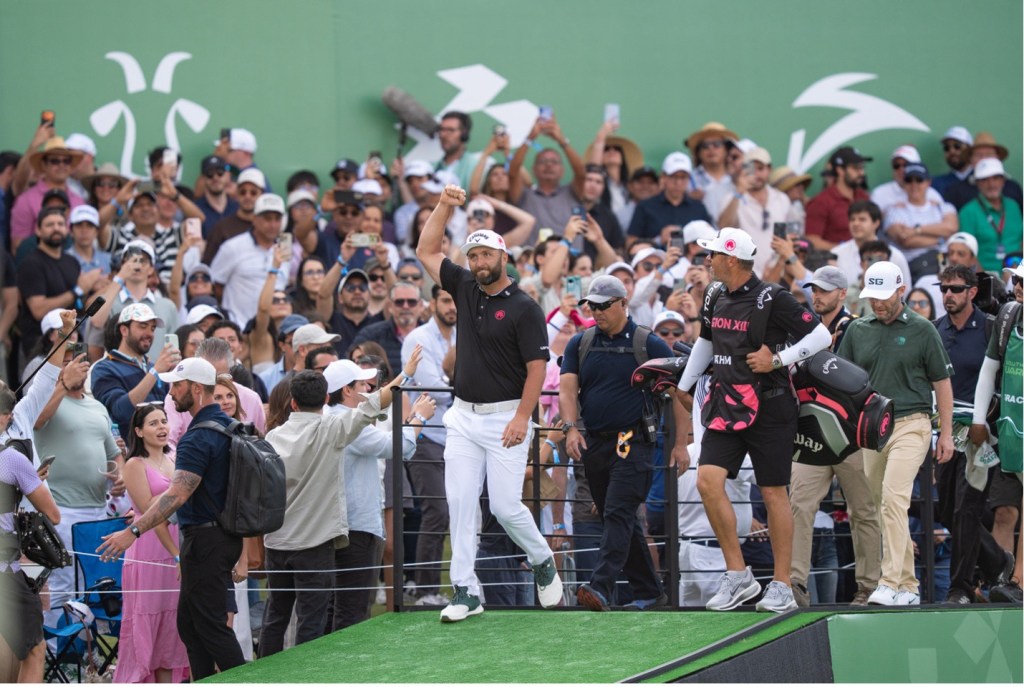
Intriguingly, the sports betting industry provides a useful snapshot of LIV’s standing in the golf world. The sportsbooks featured on the bettingtop10.com comparison platform offer coverage of LIV tournaments, but tend to favour PGA Tour events.
Sports bettors prefer to wager on traditional PGA tournaments rather LIV events, which highlights where it lies in the hearts and minds of people who follow golf.
Player uncertainty and shifting leverage
The financial uncertainty has already begun to influence player behaviour, which undoubtedly affects LIV’s commercial outlook.
The departure of Brooks Koepka and the gradual return of players such as Patrick Reed to more traditional pathways underline a growing fluidity in the player market.
Bryson DeChambeau’s contract situation has become a barometer for the league’s stability. As one of LIV’s most recognisable and commercially valuable figures, his long-term commitment would signal confidence in the project, while any departure would raise serious questions.
LIV’s early model relied heavily on large signing bonuses to secure elite talent, but that strategy is unlikely to be sustainable in a more financially constrained environment.
O’Neil has already hinted at a shift towards younger players and a broader international mix, suggesting a move away from reliance on a handful of high-cost superstars.
This transition reflects a wider recalibration, where the league must balance the need for star power with the realities of cost management.
It is a delicate equation, and one that will play a decisive role in determining LIV’s competitiveness both on and off the course.
From disruption to sustainability
LIV Golf has already achieved its initial objective of reshaping the professional game. It has driven up prize money, forced the PGA Tour to evolve and expanded golf’s reach into new markets.
The challenge now is entirely different. LIV must become investable. That means convincing sponsors that the product delivers consistent value, persuading broadcasters that it can command meaningful audiences and attracting private capital that is not reliant on sovereign backing.
It also means building a structure that can operate efficiently without the excess that characterised its launch.
The league’s strongest asset remains its global footprint, with events in markets such as Australia and Asia demonstrating genuine demand. However, its struggles to gain traction in the United States, golf’s most lucrative market, remain a significant obstacle.
The likely outcome is not an immediate collapse, but a period of adjustment. LIV Golf will continue, but in a form that is likely to be more disciplined, more strategically focused and less extravagant than before.
Recent developments may ultimately be remembered as the moment LIV Golf stopped behaving like a rebellion and started confronting the realities of being a business.


Leave a Reply