

Despite mounting media pressure over golf course housing developments, the UK golf industry is showing remarkable resilience – with record revenues, major new resort proposals and significant club investment all pointing to a sport that remains in rude health.
The housing threat to golf clubs is receiving wider attention – but the whole story isn’t being told
In recent weeks the BBC, the Financial Times and others have run major features on the growing pressure to build homes on golf courses. With the UK government chasing 1.5 million new homes in England and councils scrambling to find land, golf courses – large, often well-located and in some cases financially vulnerable – have become a target. Sixty clubs in England and Wales have closed since 2020, and one in five is said to be at financial risk.

But here’s what those headlines often miss: golf is usually pushing back, and, in some cases, winning. Rookwood Golf Course in Horsham, which had 1,100 homes planned for its land, has just secured a new 25-year lease with Horsham District Council, after local opposition made clear the course was too valuable – to wildlife and the community – to lose. The sport is under pressure, yes. But it is also capable of making a compelling case for itself.
Demand for golf is still unusually strong
If the housing debate has cast a shadow over the industry, the financial reality at many clubs tells a very different story. Lahinch Golf Club in Ireland has just reported a record-breaking year, posting an operating surplus of £2.18 million on the back of a 26 percent rise in green fee income. Non-members are now paying £392 for a round on the Old Course in peak season – and demand shows no sign of slowing.

That’s one club, but the trend is broader. Golf participation in the UK remains at historic highs following the pandemic boom, and the revenue figures at destination clubs reflect a sport that international visitors, in particular, are willing to pay a serious premium to experience. The economics of golf may be making some courses vulnerable to developers – but they’re also making others more valuable than ever.
Investment is flowing into the game
Whatever challenges exist at the margins of the industry, clubs across the UK are investing in their futures with confidence. Kinross Golf Courses in Scotland has announced an £800,000-plus upgrade programme, covering new greens machinery, GPS-equipped buggies, bunker restoration and a new driving range. Trafford Golf Centre has reopened after a major refurbishment, complete with Toptracer technology and self-serve bar stations.
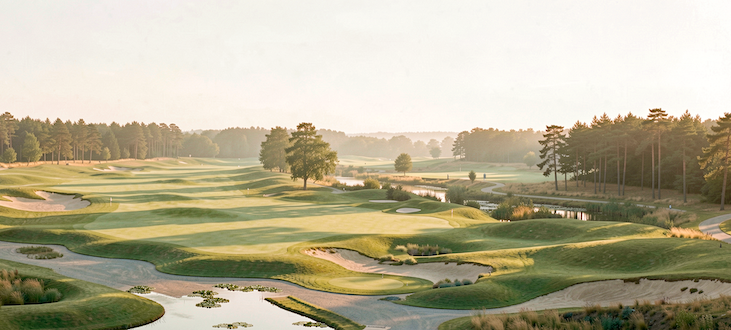
Cowdray Golf Club in West Sussex has completed the latest phase of a £1 million improvement plan, adding a redesigned driving range to its already-upgraded par three course and simulator. And a brand new championship golf resort, Brae of Angus, has just been proposed for south-east Scotland, representing a direct investment of £480 million.
These are not the actions of an industry in retreat. They are the actions of one that sees a strong future – and is spending accordingly.


Leave a Reply