

Rob Peers is the course manager at Hever Castle Golf Club in Kent, a 27-hole course located in an estate that was built more than 600 years ago, in which former residents have included two of Henry VIII’s wives, Anne Boleyn and Anne of Cleeves. He talks about his passion for recycling and how it’s led to innovative irrigation, drainage, pest control and bunker solutions.
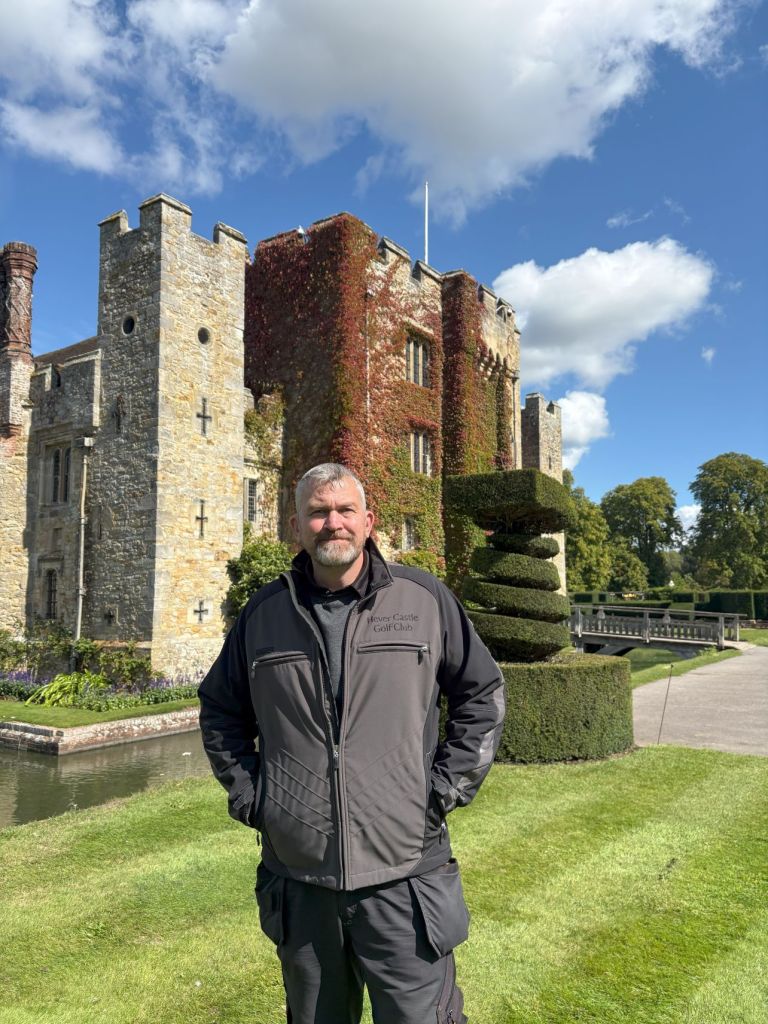
Tell us how you arrived at the position of course manager at Hever Castle Golf Club?
When I left school, I was determined to go into construction, so I went straight to construction college before progressing to a degree in building management and design at Greenwich University. I spent a year there but lost my passion for the course and the industry. After being made redundant from my next job I needed something to fill a gap while I worked out what I wanted to do. That was 32 summers ago and my temporary summer job at Hever Castle Golf Club has turned into a career I have loved. Through various roles, I regained my passion for construction, but now working with mother nature. And I’ve found a passion for innovation, sustainability and the outdoors lifestyle.
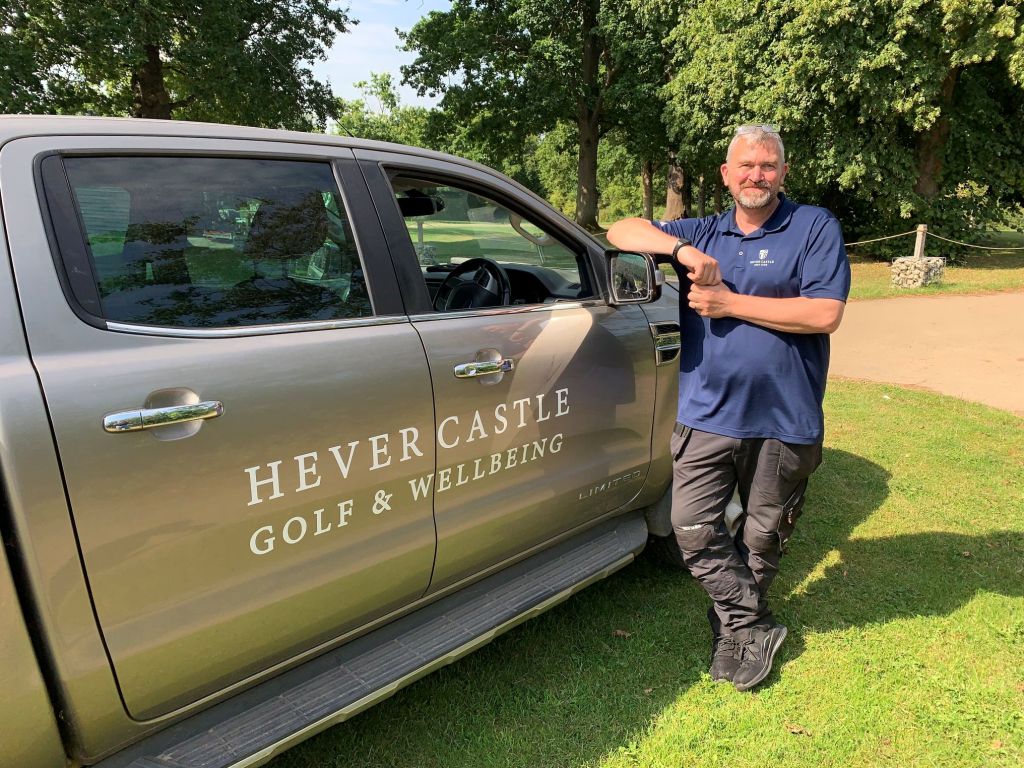
You must have seen a lot of change over that time?
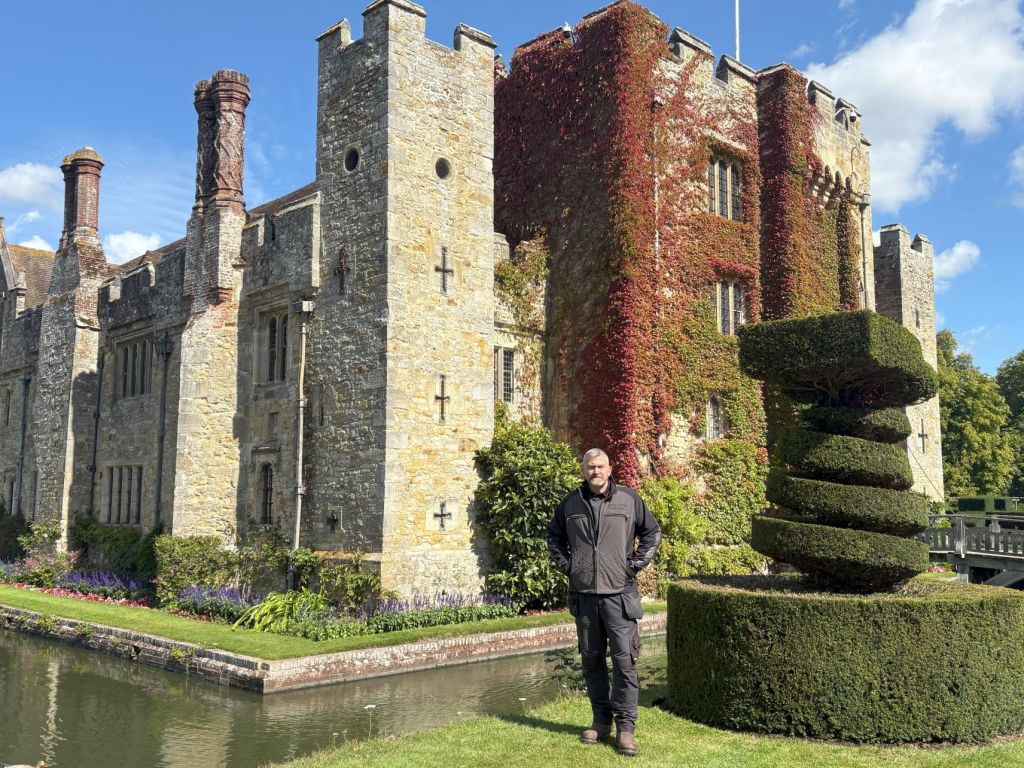
We’re part of the Hever Castle estate, so we benefit from 600 years of established grounds and beautifully mature trees. But despite the age of the estate, the golf course is only around 35 years old. In my time we’ve gone from 18 holes to 27 holes and ownership has passed back to the Guthrie family, who own the castle and the estate. They have been fantastic owners and with the proprietary model we have a lot of freedom to make improvements to the course. Over the years that has really played to my desire to innovate in a sustainable way. I’m very proud of the work we’ve done here, and more importantly how we’ve used recycled materials, sustainable practices and innovative thinking to drive improvement.
Can you give us some examples of that work?
One of the highlights was the Golf Environment Awards’ Sustainable Project of the Year we won in 2023 for our use of recycled sewage from the castle and the estate. I saw coach loads of visitors come to the castle every year and rush straight to the loos. Gallons of wastewater were flushed away with every visit, while at the same time we were paying an enormous amount to irrigate the course. I put the two together and devised a system that would take all of the sewage from the castle and the estate and repurposes it for the course. Through a system of four lagoons, we filter the sewage using a gravity driven system that removes all solid matter, removes nitrates and ‘polishes’ the water.
By the time the water leaves the bottom lagoon and enters my irrigation pond, it is certified by the environment agency as ‘excellent quality for inland bathing’.

What a great project, and one that really played to your passion for construction.
It did, but it was more about my passion for reusing materials and getting the best from the available resources. That passion has driven a lot of the changes we’ve made at the course, particularly in our ongoing partnership with EcoBunker. Our shared passion for recycling and finding innovative solutions has driven a lot of the changes we’ve made over the last couple of years and will also be a big part of the next steps we take as a club.
How has that partnership worked?
I’d heard about [EcoBunker CEO] Richard Allen’s pioneering work using recycled synthetic turf and was fascinated to see it in action, and we built some trial bunkers, then known as ‘Envirobunker’. While the sustainability side interested me, we also saw a big reduction in the time taken to maintain those bunkers compared to the rest of the course.
Our course is Harry Colt inspired, so it features oversized bunkers that are a relic of an age where labour, aggregate and resources were plentiful. A few years back, like the rest of the industry, we noticed that it was getting harder to recruit and harder to maintain the bunkers as they were, so I did a labour analysis to work out where we could better distribute our efforts. I worked out that every year it took 1.2 people working non-stop to maintain our bunkers. That’s just daily raking, edging and tidying. So, we contacted Richard and EcoBunker were invited in to advise on further bunker engineering works, bunker liners and different construction options.
Our priorities were for the bunkers to be aesthetically pleasing, reduce the amount of labour required and to complement our sustainability strategy. Richard and the team delivered on every front.
How did you run that project?
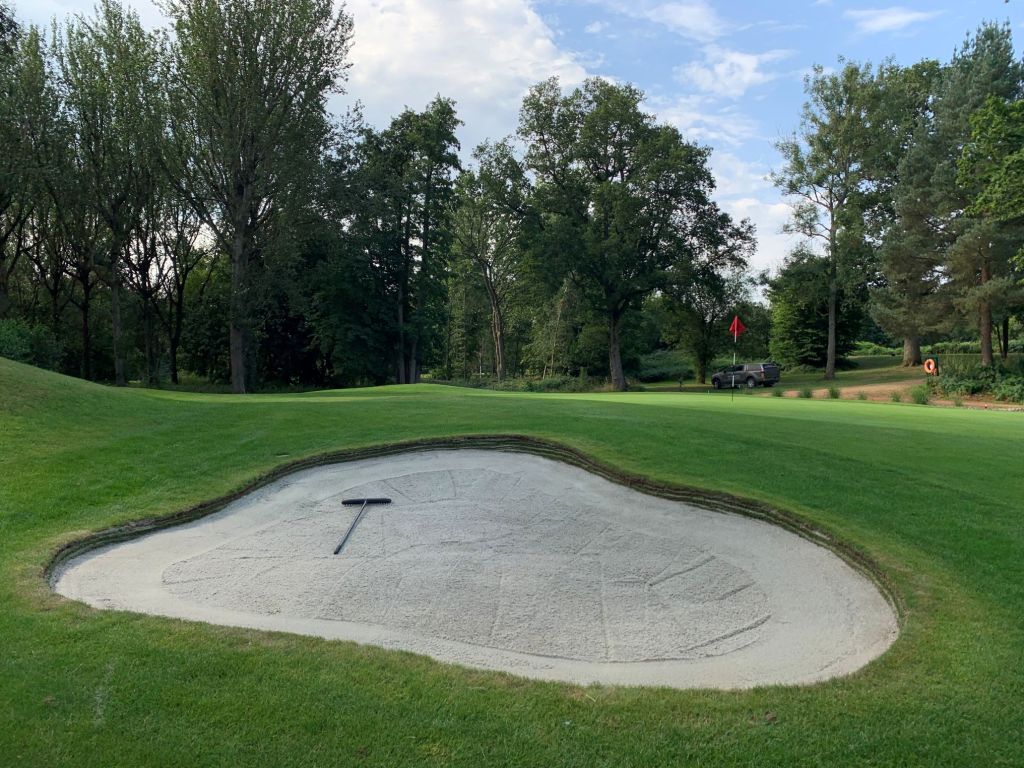
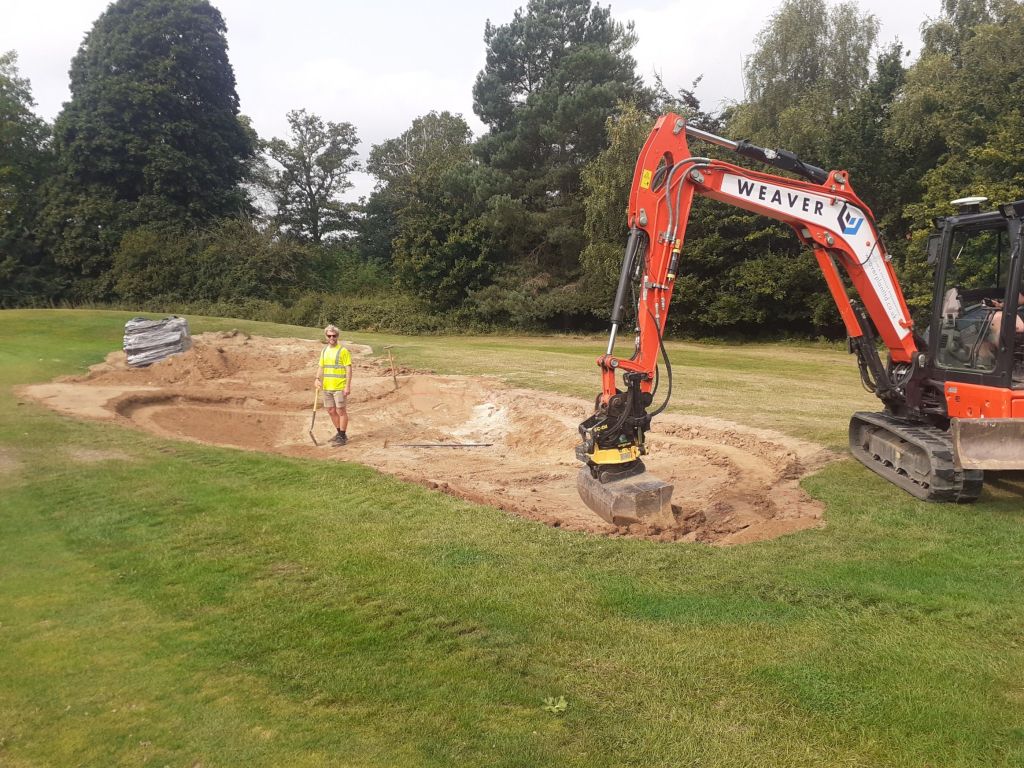
It was very much a collaboration. We targeted our greenside bunkers over the next two phases and drew on EcoBunker’s experience to devise a plan of action. We redesigned the shapes of some bunkers and rebuilt others all using recycled synthetic edging. All of the bunkers were lined using their EcoTec liners, and we even ended up removing some bunkers completely.
Throughout the project we identified goals such as playability, drainage and reduced maintenance, and planned each bunker together. From there the guys just took over and delivered precisely what we’d agreed. Not only have our maintenance hours on the bunkers been slashed, but the new bunkers look great, the members love the way that the new design has changed the way the course plays, and we’ve kept to our sustainability principles throughout. From planning to construction and review, the team at EcoBunker have been excellent and are now integral to our long-term plans for the course.
What are those next steps?
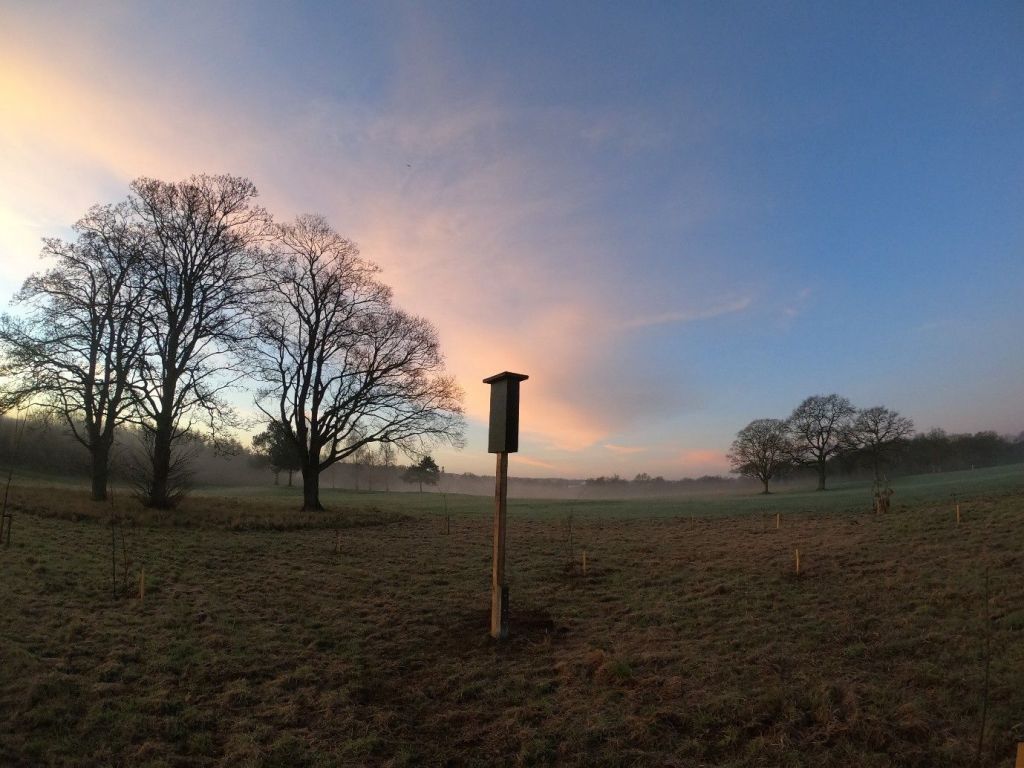
I hate to see waste, and few things make me as happy as repurposing it to solve a problem. Everything we’re doing starts from that point. One great example is our approach to leatherjackets. As with most golf courses, leatherjackets are one of our biggest problems, so I’ve made bat houses from reused fertiliser barrels and containers to encourage pipistrelle bats. The pipistrelles feed on insects, and particularly love crane flies, the bugs that lay the leatherjackets that attack the roots of our greens. By using our waste we’ve encouraged an ecosystem that benefits the course.
And that’s what we hope to do with our main goal for the coming years – water conservation. We are seeing wetter winters and drier summers and that looks set to continue, so we want to capture that winter excess and use it for our summer work. It’s something we’ve already started with the latest phase of our EcoBunker partnership. I’ve worked on our drainage system for a couple of years, and the course is responding well, but in the last phase of bunker works we introduced the EcoTec bunker liners which take drainage to a new level and also help maintain the bunker profile in adverse weather. We designed the bunkers to take advantage of that improved drainage and they feed into the wider drainage system. We simply left the nearest drainage open for the guys when they were installing the bunkers, checked that everything was running correctly and they tapped straight into the system. Our next phase will be to re-design our fairway bunkers with EcoBunker that will optimise drainage better than ever. At the same time, we will create more storage ponds so that every drop of water that we funnel from the course gets reused at the time we most need it.
It’s a busy time, but that sounds like prudent planning.
I really do think that water management will be something that every golf course has to consider in the very near future, but our ambitions go further. We have ideas for hole redesigns, that will of course feature ponds, and there are plenty of other projects on the ‘to do’ list. We have a lot planned in the next year or two, but I do believe that we can achieve great changes in a sustainable way. Going back to my early days learning about construction, I think the ethos of creating things using brand new resources might have been what turned me away from the sector. Working for so long in greenkeeping has given me a real appreciation of the natural world and I hope that we can create our best possible golf course while getting the most from every resource we have.


Leave a Reply