

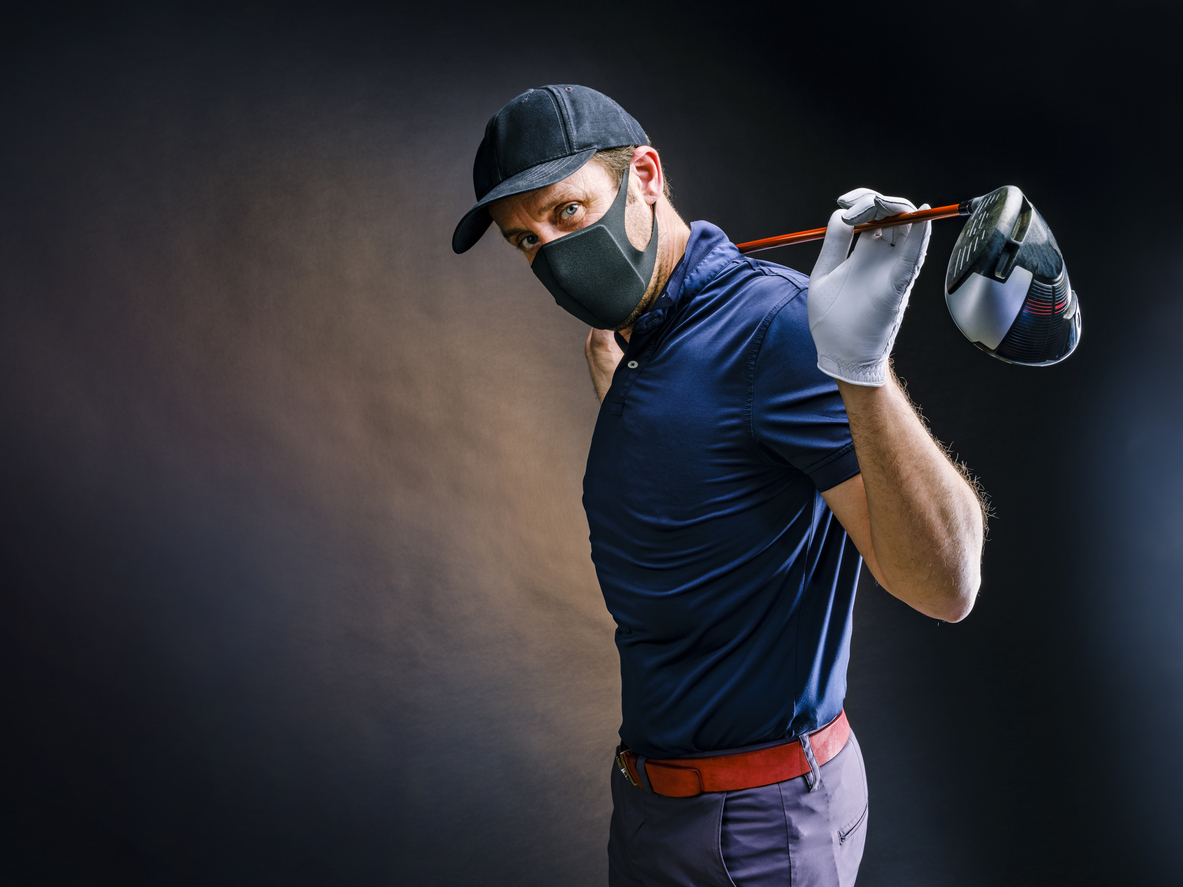
New research has found that the ‘level of [Covid-19] transmission from playing golf is likely to be extremely low’ and has led to calls that an expert in physical activity joins the UK’s SAGE advisory group.
Professor Charlie Foster, the principal advisor on physical activity for health to the four United Kingdom chief medical officers, and Dr Andrew Murray, the chief medical officer to the European Tour and a consultant in sport and exercise medicine at the University of Edinburgh, have produced a paper that an MP has said provides ‘scientific evidence that golf can be played safely with the various enhanced protocols appropriate for the new variants’.
‘COVID-19 Secure Golf in the United Kingdom 2021’ cites academic and scientific research and even argues that the game should play a role in any government’s strategy to improve the nation’s health as it tackles the pandemic.
Charlie Foster said: “As the paper shows, golf can be played safely, and it should have a central role in the government’s thinking when it comes to helping people exercise now and as we come out of pandemic restrictions.

“I have therefore recommended that an expert in physical activity join the SAGE advisory group to ensure there is consistency across the sciences represented within it, and to provide advice on allowing physical activity to return as restrictions are reduced.”
Dr Andrew Murray added: “Regular physical activity is one of the best things you can do for your health adding years to life, and having many mental and physical health benefits, be that through – for example – walking, cycling, running or golf. Golf’s careful planning, and compliance with Covid-19 tiers and regulation means its level of transmission from playing is likely to be extremely low, much lower than indoor space, or more populated outdoor areas.
“This is supported by the various scientific research the paper cites and I encourage those in SAGE and in government to review those as I am sure they will conclude that golf is similar to walking, running and cycling in being beneficial, and is safe to play with the relevant protocols in place.”
The All-Party Parliamentary Group for Golf’s chair, North Warwickshire MP, Craig Tracey said: “It is entirely understandable for government to utilise scientific advice available when creating its strategy, but it is equally important for that scientific evidence to be applied evenly.
“With the help of Professor Foster and Dr Murray, this paper provides that scientific evidence and demonstrates that golf can be played safely with the various enhanced protocols appropriate for the new variants. I am grateful to them and all the bodies in the All-Party Parliamentary Group for Golf for their hard work on preparing this thorough paper. Again we have been clearly able to make the case that golf is ready, willing and able to return safely at the earliest possible opportunity.”
This comes as new research finds that the chance of being infected with Covid while outdoors is ‘massively reduced’.
Furthermore, scientists have found that the risks are particularly low in fully open spaces such as golf courses.
Researchers found that fresh air disperses and dilutes the virus, and it helps to evaporate the liquid droplets in which it is carried.
On top of that, ultraviolet light from the sun should kill any virus that’s out in the open.
Even so, there are a handful of cases where it’s believed that infections did happen outside.
One study found that two men in China talking face-to-face for at least 15 minutes was enough to spread the virus – so the advice is to avoid being face-to-face if you’re outside with somebody else and less than two metres apart.
As for the virus being on outdoor surfaces such as flagpoles, researchers in the US found the virus on the handles of rubbish bins and the buttons at pedestrian crossings.
They reckon this may have led to infections in the area, though at a relatively low level compared with other ways of spreading the virus.
Many scientists now think that the amount of virus likely to be left on a surface would be minimal, and would disperse within an hour or two.
“The chance of transmission through inanimate surfaces [outdoors] is very small,” says Prof Emmanuel Goldman of Rutgers University.


Leave a Reply to MichaelU Cancel reply