

Some low-lying courses may need to make way for floodwater to protect nearby, an environmental geography professor has said.
According to The Times, golf courses in Scotland could be required to act as flood-storage areas as the country faces increasingly severe storms and rainfall.
Professor Larissa Naylor, of the University of Glasgow, believes some low-lying courses may need to be considered as part of wider flood-management plans, allowing rivers to spread across floodplains rather than putting nearby towns and businesses at greater risk.
Her comments follow severe flooding at Dumbarton Golf Club, which suffered the worst flood damage in its history after Storm Boelo brought heavy rain to the area last month.
The River Leven, carrying water from Loch Lomond towards the River Clyde, was unable to discharge freely because of high tides. Water overflowed its banks and flooded the course, which remains closed.
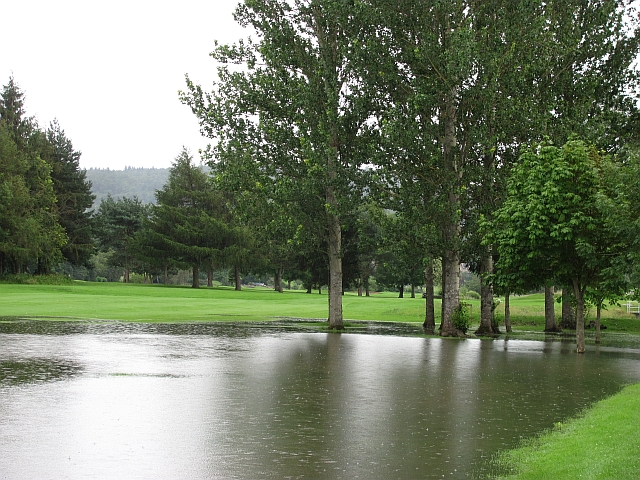
© Copyright Richard Webb and licensed for reuse under this Creative Commons Licence.
The club, established in 1888, is now facing an uncertain future. Its vice-captain, Paul Savage, has described its position as precarious, explaining that a collapsed section of embankment is allowing water to return to the course when the tide rises. The club does not have the funds to repeatedly pump out the water without first repairing the embankment.
Professor Naylor said the land occupied by the course could potentially provide valuable flood storage because of its low-lying position upstream of Dumbarton.
Allowing rivers more space during periods of high flow can reduce the risk of flooding in built-up areas, she argued, and authorities should assess whether some golf courses could play a role in that process.
She also highlighted the potential for nature-based solutions, including rewilded buffer zones that could help protect communities and valuable assets from rivers and the sea.
However, the professor acknowledged that the loss of golf facilities would have significant consequences. Golf courses provide sporting, social and health benefits, while some are important contributors to local economies, particularly in areas with a strong golf tourism industry.
She said decisions about changing land use would involve difficult questions over funding, responsibility and securing the support of local communities.
The issue is not confined to river flooding. Scientists from Dynamic Coast have previously warned that 109 Scottish coastal golf courses could be at risk from erosion by 2050. Montrose Golf Links is among the courses already experiencing significant coastal erosion, with its dunes being lost to the sea.


Leave a Reply