

In the second article of this series, Dr John Fry explores why golf course management’s future may lie in rediscovering many of the principles that shaped the game for generations.

In the first article of this series, it was argued that conversations about sustainability should not begin with irrigation systems, fertiliser programmes or carbon calculations, but with a much simpler question: Who are we as a golf club?
Before clubs can make informed decisions about sustainability, they must first understand their own identity and define what quality means for them.
Once that question has been answered, attention naturally turns to the golf course itself. What should a sustainable golf course actually look like?
The answer may be more surprising than many expect. Rather than searching for entirely new solutions, golf’s future may lie in rediscovering aspects of its past.

When did perfect become the standard?
Over recent decades, many golf clubs have gradually adopted a relatively narrow definition of quality. Deep green fairways, immaculate presentation, lush rough and consistently soft playing surfaces have become synonymous with a well-managed golf course.
Advances in irrigation, machinery and turfgrass management have undoubtedly helped achieve these standards, while televised professional tournaments have further reinforced expectations of what a ‘good’ golf course should look like.
The stark reality, however, is that changing climates, increasing regulation and growing resource constraints mean maintaining these highly managed conditions are becoming increasingly difficult and expensive.
Rather than continually trying to preserve yesterday’s definition of quality, perhaps the time has come to rethink what quality looks like in the first place.
Looking back to move forward
The phrase ‘Back to the future’ may seem an unusual way to describe sustainability, yet it captures one of the central messages emerging from The R&A’s Golf Course 2030 research.
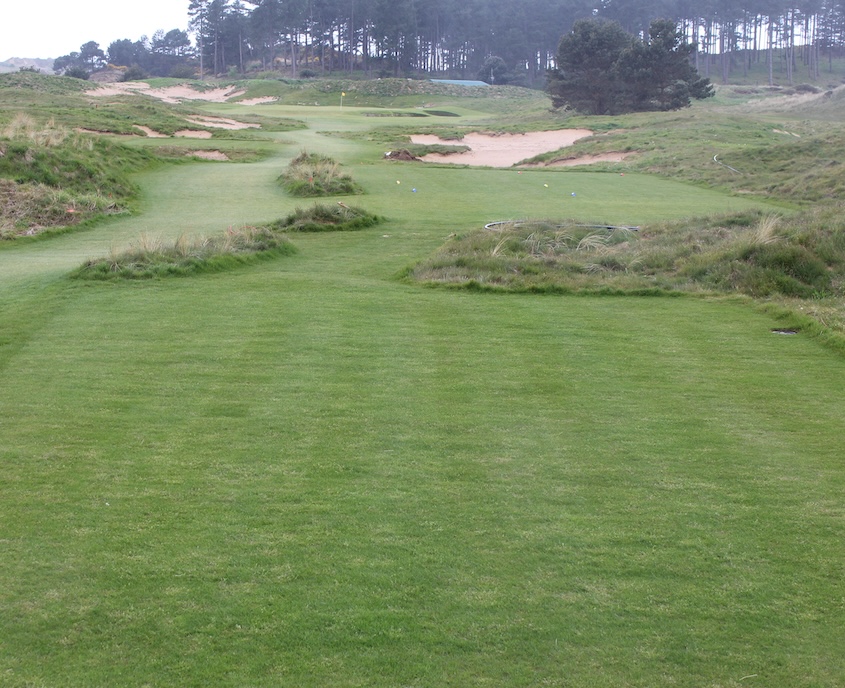
The overall direction of travel is not towards ever greater management intensity. Instead, golf courses are likely to become more rugged, more natural, with firmer and faster playing surfaces that place greater emphasis on creativity and shot-making – characteristics remarkably similar to many of the game’s original courses.
This isn’t about lowering standards. It’s about rediscovering a different definition of quality.
Long before extensive irrigation systems and intensive maintenance became commonplace, golf courses were shaped by the landscapes on which they sat. Weather influenced play. Fairways ran firm. Golfers adapted to changing conditions throughout the seasons. Those characteristics were once accepted as part of the game. Perhaps they can be again.

The future may already exist
One of the simplest exercises any golf club can undertake is to look backwards. Search through archive photographs. Compare aerial images. Speak with members who have known the course for decades.
What did your course look like 20 years ago? Fifty years ago? Even 100 years ago?
You may discover wider fairways, more natural vegetation, fewer heavily managed areas and golf courses that reflected their local landscapes rather than striving to resemble every other course in the country.
Of course, nobody is suggesting we recreate the past exactly. Golfer expectations have evolved, technology has improved and excellent playing conditions will always remain important.
However, those historic photographs may provide some valuable clues about the future. They remind us that many of the characteristics sustainability is now encouraging us to embrace are not new ideas at all. They are qualities golf possessed for generations.

Less can sometimes mean more
This philosophy extends beyond the overall appearance of the course. Golf clubs are encouraged to reconsider long-held assumptions about many individual features. For example, could some areas of closely mown rough be naturalised instead, reducing inputs while creating stronger visual character and more strategic golf?
Similarly, rather than simply rebuilding every bunker exactly as it exists today, clubs might ask whether bunker placement still reflects the original strategic intent of the course. In some situations, fewer bunkers, more natural bunker presentation or even alternative hazards may better support both sustainability and the golfing experience.
Even green aprons, traditionally viewed as an essential feature of course presentation, are being reconsidered, with some clubs allowing fairways to run directly into greens without negatively affecting golfer experience.
Redevelopment work at Hillside Golf Club offers an excellent example of this philosophy in practice. Rather than simply modernising the course, the project promoted dune landforms, natural sand scrapes and reshaped playing corridors to create a course that feels more strategic, more visually dramatic and more connected to its natural links landscape.
The common thread is not cutting costs for the sake of it. It is ensuring every aspect of the course has a purpose, and is intertwined with both the golfer experience and the traditional heritage of the course.

The wonky vegetable revolution
Golf is not the only industry redefining quality. Walk into most supermarkets today and you’ll find dedicated displays of ‘wonky’ fruit and vegetables. Products that would once have been rejected are now celebrated for their authenticity. Consumers increasingly value local produce, artisan products and experiences that feel genuine rather than manufactured.
Quality has become less about perfection and more about character. Perhaps golf is beginning a similar journey.
Firmer playing surfaces can encourage greater creativity and strategic thinking. More natural landscapes can strengthen a course’s sense of place. Seasonal variation can remind golfers that they are playing a game shaped by nature, not disconnected from it.
Perhaps the golf courses that leave the greatest impression in years to come will not simply be those presented to the highest standard, but those with the confidence to embrace their own unique character. The opportunity is not to lower standards, but to redefine them.
Rediscovering character
One unintended consequence of pursuing increasingly uniform conditions is that golf courses can begin to lose some of their individuality. The courses we remember most are rarely those that simply looked immaculate.
They are the ones with character. The ones shaped by their landscape. The ones that encourage creativity rather than repetition.
This year’s Open Championship at Royal Birkdale provided a timely reminder of that philosophy in action. Viewers saw a course that had embraced significant ecological restoration in recent course developments, areas of rewilding and dune habitats, the landscape felt more natural, authentic and unmistakably linked to its coastal setting.
These changes enhanced the championship’s identity, creating a dramatic stage that celebrated both the golf course and the environment in which it sits.
Perhaps the greatest opportunity presented by sustainability is not simply reducing environmental impacts or maintenance inputs. It is giving golf clubs permission to rediscover the character that has always made them unique.
Conclusion
Sustainability is often presented as a journey into unfamiliar territory. Perhaps it isn’t. Perhaps one of the best ways to imagine the future of your golf course is simply to look at its past.
The photographs hanging in your clubhouse may reveal more than your club’s history. They may offer a glimpse of where golf is heading next.
As the Golf Course 2030 research suggests, the future is likely to be characterised by more natural, more resilient and more strategic golf courses. Rather than viewing this as a compromise, perhaps we should see it as an opportunity to rediscover many of the qualities that made golf distinctive in the first place.
Sustainability isn’t about inventing the future. It’s about going back to the future.

Back to the future – key points
• Sustainability is about redefining quality, not lowering standards.
• Golf’s future may be found by rediscovering the principles that shaped its past.
• Firmer conditions and natural landscapes can create more strategic and memorable golf.
• Course history can provide valuable guidance for future management decisions.
• Every maintained feature should enhance both playability and club identity.
• Character and authenticity are becoming increasingly important measures of quality.
• Sustainability offers clubs permission to celebrate what makes their course unique.
• Great golf courses are remembered not because they look the same, but because they have a distinctive sense of place.

For more information, contact Dr John Fry at jfry@myerscough.ac.uk or view University Centre Myerscough’s range of academic golf provision here: www.ucmyerscough.ac.uk
Learn more about The R&A’s Golf Course 2030 programme here: www.randa.org/en/what-is-gc2030


Leave a Reply