

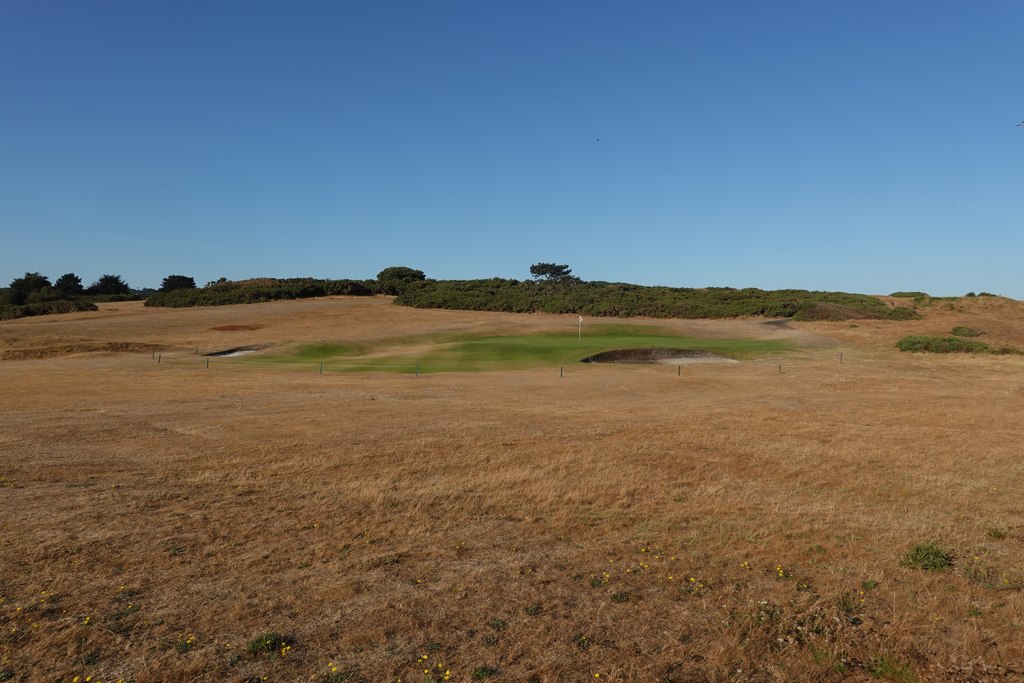
Golf clubs across southern and eastern England could face the first restrictions on business water use in two decades, after two water companies moved towards non-essential use bans, as the 2026 drought deepens.
Southern Water has applied to the Department for the Environment and Rural Affairs (Defra)for a drought order and an accompanying non-essential use ban (NEUB) covering Hampshire and the Isle of Wight. Anglian Water, which serves seven million customers predominantly in the east of England, has confirmed it will explore the same measure if supplies fall further.
Unlike the hosepipe bans now in force across nine supply areas, a non-essential use ban targets businesses. According to the water regulator Ofwat, it would require firms to stop filling or maintaining non-domestic swimming pools, paddling pools and ponds, operating a mechanical vehicle washer, cleaning vehicles, cleaning non-domestic premises and cleaning windows.
For a golf club, that reaches into the maintenance facility. Machinery wash-down after cutting would be among the uses caught, as would clubhouse window and premises cleaning and, at clubs with leisure facilities, the pool.
The uses reported as falling within Southern Water’s application do not include irrigation of sports turf, which is generally governed by abstraction licensing rather than non-essential use restrictions. But clubs drawing from their own boreholes or reservoirs are not insulated: more than 1,350 abstraction licences are already subject to restriction, with the Environment Agency reporting increasing hands-off flow conditions as river levels fall.
‘The next available option’
Anglian Water’s position hardened this week. Dr Geoff Darch, the company’s head of strategic asset planning, said that restrictions on businesses were the “next available option” and something the firm was planning for, though he said they did not have to be escalated at this stage.
“We are appealing for people to be as efficient as possible, particularly over the next few days and weeks as we get through this dry period to help avoid further restrictions,” he said.
The company has separately asked customers in Norwich to limit water use to “essential purposes — drinking, cooking, washing and cleaning”, and has asked businesses in the area to reduce consumption wherever possible. The River Wensum, which supplies the city, is at an exceptionally low level, among the lowest since records began in the 1960s.
Anglian’s hosepipe ban, in force across its whole supply area except Hartlepool since 11 July, produced an initial nine percent drop in demand, since settling at around five percent. The company is at drought level 2 in its Fenland and Norfolk, Norwich and Broads water resource zones.
Southern Water submitted its application at the end of July, following the declaration of drought in Hampshire and the Isle of Wight, and ran a public consultation from 4 to 11 August. A second, separate drought order would allow it to keep abstracting from the River Test at lower flows.
“Due to the ongoing dry weather… we have reached the trigger level requiring us to apply to Defra for a drought order and non-essential use ban in these areas,” a company spokesperson said. “These are precautionary measures and making an application does not mean they will be introduced. However, we must follow the regulatory process to protect water supplies and the environment if dry conditions persist.”
Environment Secretary Angela Eagle has until the end of August to decide. Whatever Defra determines is likely to shape how other companies proceed.
A rare instrument
Non-essential use bans are unusual. Between 1996 and the start of 2026, 124 drought permits and 57 drought orders were issued in England and Wales, but no NEUB has been imposed since 2006. South East Water applied for one in 2025 and withdrew it that December after its Ardingly reservoir recovered.
The backdrop is a drought that has escalated faster than the sector’s planning assumptions. The National Drought Group confirmed on 10 August that 71.3 percent of England was in drought, covering 45 million people, with more than 27 million living under water use restrictions. Nowhere in England remained in normal status.
July was the driest in 190 years, with England receiving 10 percent of expected rainfall and the East of England just 0.8mm — one percent of the long-term average. The first ten days of August brought five per cent nationally. Reservoir storage has fallen to 69 percent, 11.6 percent below normal, after the largest single-month July drop recorded in at least three decades.
Thames Water and Essex & Suffolk Water are both now at drought level 2 across all their zones, and Hanningfield reservoir is one of only three in England classed as exceptionally low for the time of year. The Met Office has said there is no strong signal for sustained widespread rainfall through the rest of the summer.
This is the third drought in five years, after 2022 and 2025.
What clubs should do now
Club managers are being advised to check guidance from their own supplier rather than assume a uniform position – supply boundaries do not follow county lines, and parts of Hampshire sit under two different companies’ restrictions.
Practical preparation means establishing where the club’s water actually comes from, setting irrigation priorities under further restriction, and working out whether machinery cleaning could continue. Clubs with recycling wash-off systems, which reuse the same water rather than drawing on mains supply, are generally able to keep washing down equipment during a drought order.
Communication matters too. Clubs that explain changes in course presentation to members and visitors early tend to fare better than those that wait to be asked — and with the sport’s water use scrutinised during every drought, being able to demonstrate restraint carries value beyond the agronomic.
Meanwhile, Stourbridge Golf Club has said that its golf course will remain closed for the time being, after it was hit by a wildfire.


Leave a Reply