

The first article in a three-part sustainability series, Dr John Fry from University Centre Myerscough explains why golf clubs should stop chasing the same standards, and start defining success on their own terms.

Based on research undertaken with The R&A as part of the Golf Course 2030 programme, the series examines some of the key sustainability challenges facing golf and how clubs can respond.
When sustainability is discussed within golf, conversations often focus on water use, biodiversity, climate change or reducing maintenance inputs. While these issues are undoubtedly important, the Golf Course 2030 research highlighted a more fundamental challenge facing golf clubs.
Before deciding how a course should be managed, clubs must first answer a simpler question: what kind of golf club are we trying to be?
Walk into most golf clubs and ask what they are striving for, and the answer is likely to sound remarkably similar. Better greens. Better fairways. Better bunkers. Better presentation. In many ways, golf has become engaged in a collective pursuit of perfection.
Yet perhaps the more important question is whether every club should be chasing the same thing in the first place.
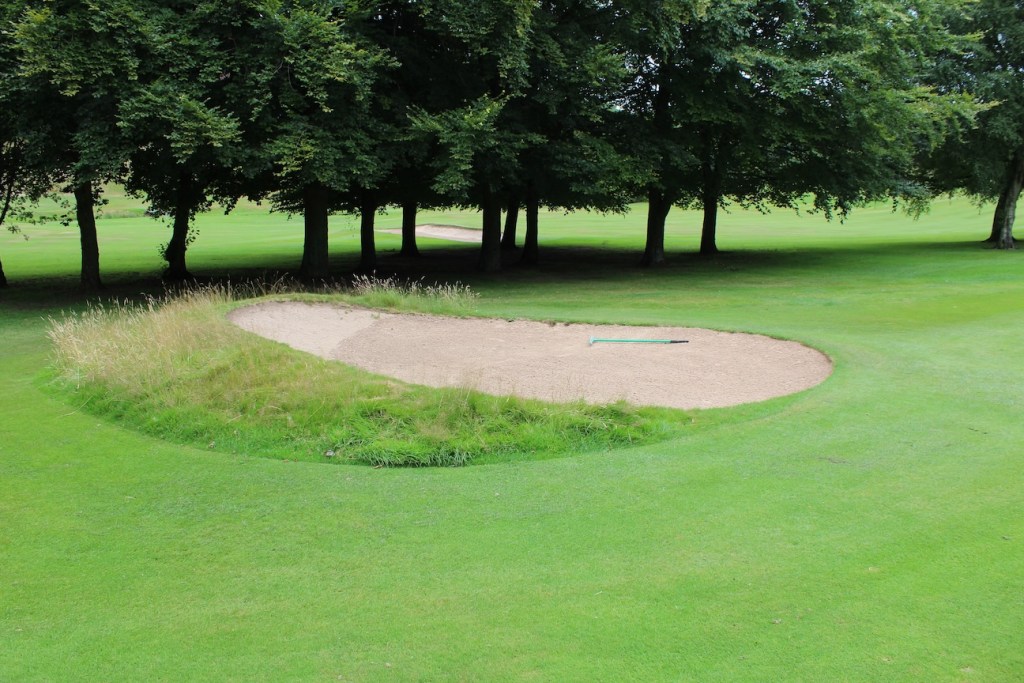
The pursuit of perfection
For decades, many clubs have benchmarked themselves against the highest standards they can find.
Championship venues, televised tournaments and elite facilities often become the reference point for discussions around quality. While this aspiration is understandable, it can sometimes create unrealistic expectations and unintended consequences.
The reality is that most golf clubs operate under very different circumstances. They possess different budgets, different staffing levels, different landscapes and different customer bases. Yet despite these differences, many continue to pursue remarkably similar maintenance objectives.
As environmental pressures increase and resources become more constrained, that approach is becoming increasingly difficult to sustain.
No two golf clubs are the same
One of the clearest findings from Golf Course 2030 is that golf clubs should establish what quality means within their own context. No two clubs are the same, and that course condition priorities should be aligned with the club’s target market, identity and overall strategy.
A traditional members’ club, a municipal facility, a family-focused venue and a destination golf resort all provide different experiences. They serve different customers, operate with different resources and pursue different business objectives.
For example, a traditional members’ club may place particular emphasis on competition golf, consistency of playing conditions and maintaining features that support its heritage and identity. A family-focused facility may place greater emphasis on accessibility, pace of play and creating an enjoyable environment for golfers of all abilities. Meanwhile, a destination resort may focus strongly on presentation and visitor experience, while a municipal course may balance competitive golf with broader objectives around affordability, participation and community engagement.
The expectations of a long-standing member at a traditional club may therefore differ from those of a casual golfer visiting a pay-and-play facility. Equally, the priorities of a destination resort are unlikely to be exactly the same as those of a community-focused municipal course.
Given these differences, it seems reasonable to ask why their definitions of quality should be identical.
Understanding your position in the marketplace
The Golf Club Continuum provides a useful way of thinking about this challenge.

At one end sit traditional clubs characterised by formal competitions, stricter membership structures and a premium member-focused experience. At the other end are facilities prioritising accessibility, flexibility and pay-and-play participation.
Most clubs sit somewhere between these two positions.
Importantly, neither approach is better than the other. The objective is not to become a particular type of club. The objective is to understand who you are, who you serve and ensure that every operational decision reinforces that position.

The danger of benchmarking
Golf clubs often compare themselves against venues operating in entirely different circumstances.
A private members’ club may compare itself to a neighbouring club with a larger budget or a different membership profile. Committees may visit highly regarded venues and return with lists of features they believe should be replicated. Even well-intentioned comparisons can create pressure to pursue standards or priorities that do not necessarily align with the club’s own objectives.
The challenge is that benchmarking can sometimes distract clubs from what their own customers actually value.
Consider two successful restaurants. One may offer fine dining and charge accordingly. Another may provide simple, affordable food in a relaxed atmosphere. Both can be successful businesses because they understand their customers and consistently deliver against expectations. Problems only arise when one starts trying to become the other.

The hidden cost of confusion
One of the biggest challenges facing golf clubs is not necessarily a lack of resources, but a lack of alignment. Committees may have one vision for the club, management another and the marketing team may be promoting something different entirely. Meanwhile, the greenkeeping team can find itself working towards objectives that have never been clearly defined or effectively communicated.
The result is often frustration on all sides. Members question maintenance decisions, greenkeepers struggle to explain changing practices and managers face pressure to maintain standards that may no longer be realistic, necessary or aligned with the club’s priorities. Without a shared understanding of what the club is trying to achieve, even well-intentioned decisions can create confusion and conflict.
Getting everybody pulling in the same direction
This is why sustainability should never be viewed solely as a greenkeeping issue. Course management decisions influence marketing, member satisfaction, operational budgets and the overall reputation of the club. As such, they require a shared vision.
When clubs are clear about their identity, decision-making becomes significantly easier. Resources can be directed towards the areas that matter most, maintenance standards can be aligned with customer expectations, and communication becomes more effective because everyone is working towards the same objective. Perhaps most importantly, difficult decisions become easier to explain.

Defining quality on your own terms
The sustainability challenge facing golf is often framed around maintaining less. However, the research suggests that the more important conversation may be about maintaining differently. Rather than asking how every area of the golf course can be improved, clubs may need to consider which aspects of course condition matter most to the experience they are trying to provide and where resources will have the greatest impact.
This does not mean lowering standards. Rather, it means defining standards with greater clarity and ensuring they are aligned with the club’s identity, customer expectations and long-term objectives. The clubs most likely to succeed in the future may not be those pursuing perfection across every square metre of the property, but those making deliberate decisions about where resources create the greatest value and focusing their efforts accordingly.
Clarity as a prerequisite for sustainability
The sustainability debate in golf often begins with questions about water, machinery, labour and maintenance inputs. Yet perhaps a different conversation should come first. Before deciding how to manage the golf course, clubs must first decide what kind of golf club they want to be. Only when identity becomes clear can meaningful decisions be made about quality, resources and long-term sustainability.
Conclusion
Golf clubs face an increasingly complex future. Rising costs, environmental pressures and changing expectations will require difficult decisions about how resources are allocated and how courses are presented. The temptation for many clubs will be to continue pursuing a universal vision of quality, assuming that higher standards of presentation are always the route to success.
The clubs most likely to thrive may not be those that spend the most, but those that possess the clearest understanding of their identity, purpose and priorities. Rather than trying to emulate every perceived best practice, successful clubs will be those that make deliberate choices about where to focus their resources and how best to serve their target audience.
Ultimately, sustainability is not simply about reducing inputs. It is about aligning resources, expectations and decision-making behind a common purpose.
In a world where every golf club is different, success is not about achieving the same standards as everybody else, but lies in understanding what really matters most to your members, your customers and your club – and doing that exceptionally well.
Quality and sustainability – key points
• Sustainability starts with understanding club identity.
• Different golf clubs require different definitions of quality.
• Benchmarking against inappropriate comparators can lead to poor resource allocation.
• Course management decisions should support the overall club strategy.
• Management, marketing and greenkeeping teams should work towards a shared vision.
• Clear priorities make difficult decisions easier to communicate.
• Sustainability is as much an organisational challenge as an environmental one.
• Successful clubs focus resources on what matters most to their customers.

For more information, contact Dr John Fry at jfry@myerscough.ac.uk or view University Centre Myerscough’s range of academic golf provision here: www.ucmyerscough.ac.uk
Learn more about The R&A’s Golf Course 2030 programme here: www.randa.org/en/what-is-gc2030


Leave a Reply