

After a multi-million-pound renovation, Stoke Park in Buckinghamshire still offers classic Harry Colt parkland golf just 45 minutes from central London – with the history, atmosphere and conditioning to match its famous name, writes Dan Box.
If you’re looking for a quintessential English parkland course less than 45 minutes from central London, you really can’t do much better than Stoke Park.
It’s the venue for James Bond’s famous match with Goldfinger back in 1964, and the filming location for Bridget Jones’s Diary and Layer Cake. Most people will recognise it instantly from that iconic white mansion house. Set within around 300 acres of grounds, the estate has a hotel, spa, golf course and even a yearly tennis exhibition that some of the world’s best players use as a warm-up for Wimbledon. It doesn’t get more English than that!
The course was first laid out in 1909 by Harry Colt – the man also responsible for Pine Valley, Wentworth, Sunningdale and Muirfield – and has recently undergone a substantial multi-million-pound renovation ahead of its 2026 reopening. The front nine has had the most attention, with a rethink of the bunkers, tweaks to the run-offs around the greens and brand-new tees on all nine holes.
There’s also a new golf-specific clubhouse right next to the practice facilities. It houses a small but well-stocked pro shop and a relaxed bar at the back that’s ideal for a post-round drink or a bite to eat. It’s smart without being flashy, and ties in well with the overall atmosphere of Stoke Park.
Whilst initial impressions may have you thinking that this is an intimidating place, with security at the front gates to check that you have a tee time booked, the overall welcome from staff couldn’t have been friendlier. On numerous occasions I was asked if I wanted help with my bags, including a buggy ride to and from the car park. One of the course marshals, Derek, was particularly helpful and even went out of his way to explain some of the changes that have been made to the course in recent months, including the impending opening of a huge new putting green just behind the practice range.
Where there were once 27 holes, there’s now a single 18-hole layout made up of the Colt and Alison loops. The Lane Jackson nine, to the left of the mansion as you drive in, is closed, apart from a three-hole loop that the greenkeeping team still maintains.

The course
This is classic English parkland golf, which immediately recalls the likes of Wentworth or The Grove. Conditioning was brilliant when I visited, clearly helped by limited numbers and plenty of hard-working greens staff. Despite a mixed spring, the course was dry, the fairways were perfectly manicured, the bunkers were perfectly presented and the greens were excellent. They ran true and fast, with plenty of trickery thanks to the sloping, but still enough to hold a well struck iron shot.
The pace of play adds a lot too. Tee times are 15 minutes apart with a maximum of around 80 golfers on the course per day, which means you’re never being hurried along and adds to the peaceful, exclusive environment.
The first tee and ninth green sit in the middle of a large lawned area in front of the mansion. The tee, and the putting green, used to be much closer to the mansion, but perhaps sensibly have been moved further away from the road whilst also ensuring that the practice area is out of the firing line.
Play from sensible tees and this is an enjoyable round. The challenge comes from smartly placed bunkers and the subtleties around the greens, rather than length. From the yellows it measures just over 6,100 yards, a similar distance to most of our home courses, with wide fairways and light rough. Stray offline and you might find yourself in the trees, but on the whole, you’ll be unlucky to lose a ball unless you find the water. It gives most golfers the chance to get the ball in playing off the tee, making for a relaxed, enjoyable rhythm to the round.
Front nine
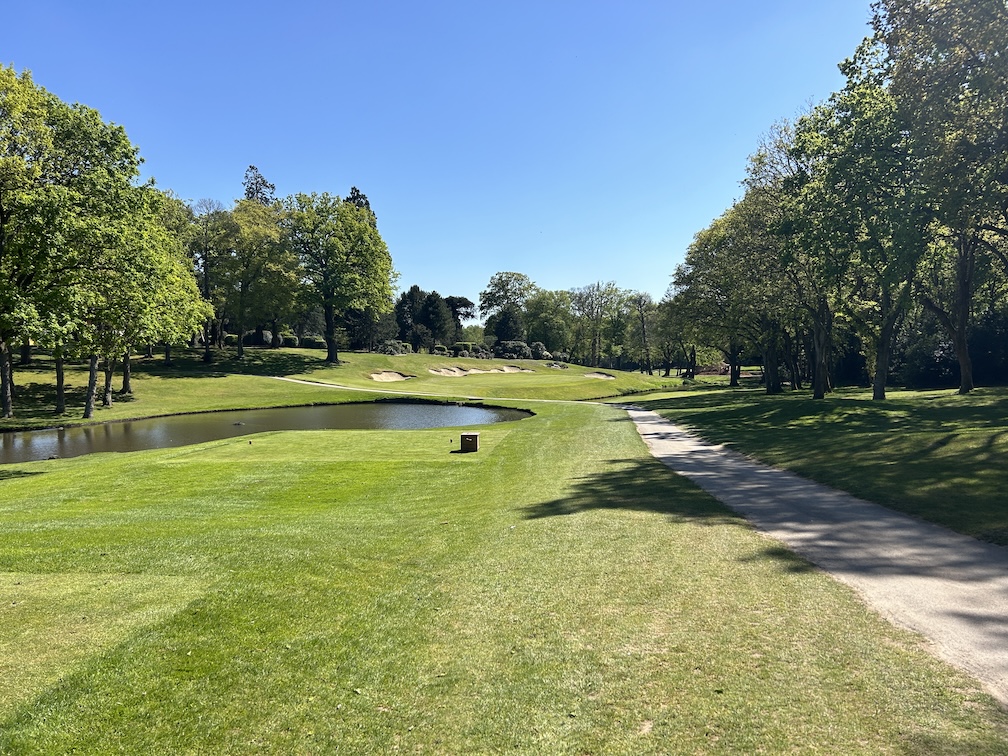
The 3rd is a brilliant uphill par three, tucked at the bottom of a steep drop behind the second green. It requires a mid-iron to a large green flanked by bunkers running diagonally down the right-hand side of the hole, making par a very respectable score.
The 5th is a gettable par five with a slight dogleg left, and a good drive should leave you with a genuine shot at getting there in two.
The 7th is supposedly the inspiration for Augusta’s famous 16th. If you squint, you may just about see why – a sharply sloping green, water lurking below, bunkers ready and waiting.
The 8th is a great short par four. The longer hitters will fancy their chances off the tee, but there are some awkward bunkers to deal with and a green with a big slope on the left that makes it play harder than the scorecard would suggest.
Back nine
The 10th is a great-looking downhill par four, similar in feel to the opener but with a bit more undulation. The green is long, so club selection really matters – pick wrong and you’re in for a long putt.
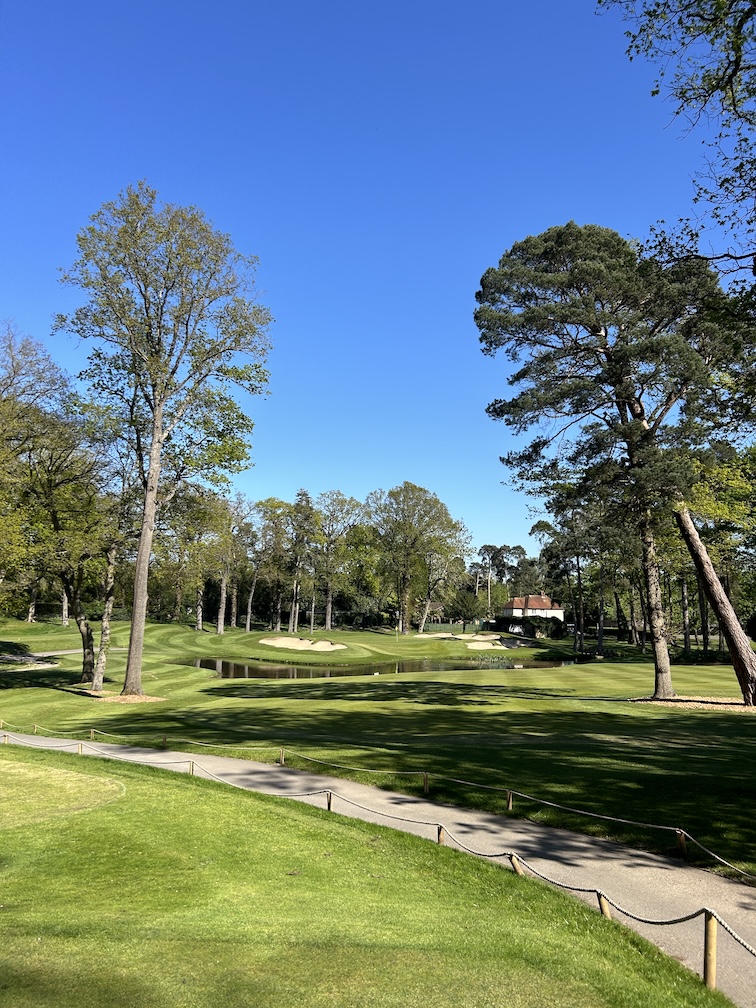
The 12th and 13th are a nice pairing. The 12th is a tough long par four where keeping it out of the bunkers is the main priority, with some beautiful houses along the right and big pines down the left. When I played, a family of deer were leaping between gardens on the right – until my playing partner’s second shot pinged off one of the pines and sent them bolting. The 13th is a more forgiving par five where a solid drive should set up a real birdie chance. Just don’t do what I did, which is miss left with my second shot and leave an impossible flop shot over the left greenside bunker!
The 16th was probably my least favourite. It slopes hard right to left with a lake waiting on the left, a stream crossing the fairway, and an enormous green to find. It didn’t quite feel like the rest of the course to me.
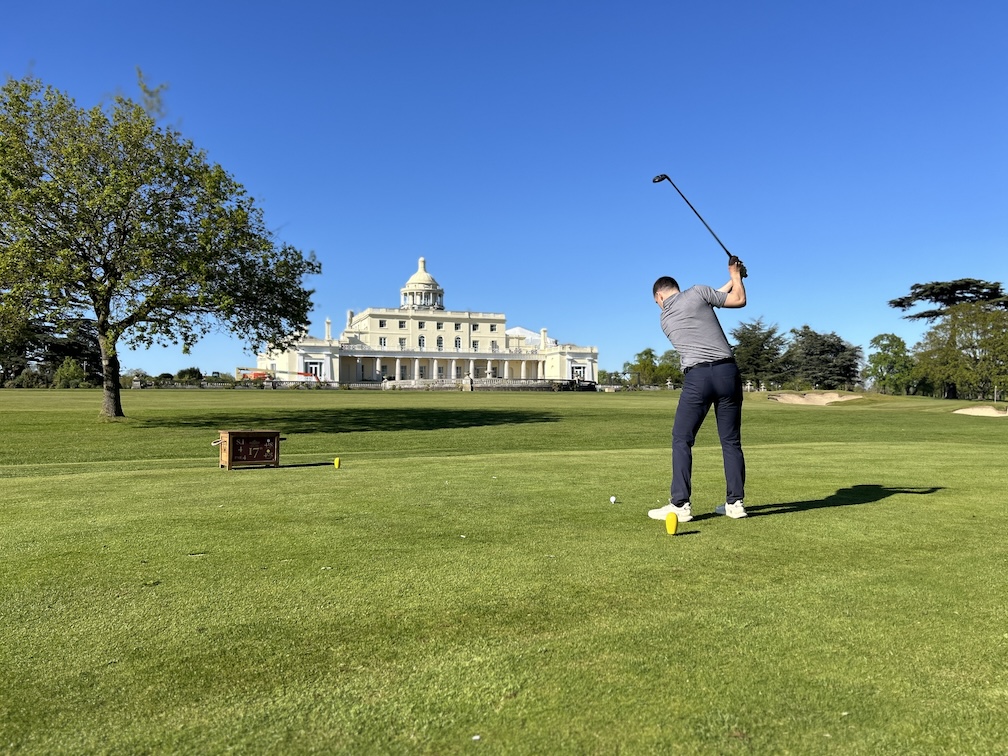
The 17th, scene of Bond’s ball switch in Goldfinger, is a proper test. Bunkers all down the left, trees on the right, then downhill to a green with a pond short-left and a big bunker to the right. Take your par and move on – even a bogey is not a disaster!
The 18th finishes things off with a solid uphill par four, the green sitting right in front of the back of the mansion. Lots of slope means your putting stroke gets one last examination before you can head inside for a well-earned drink.
The verdict
Overall, this is a great golf course, which strikes a perfect balance of challenging you without feeling like you’ve been completely beaten up. If you keep it in play off the tee and putt well, there’s no reason why you can’t shoot a good score.
As an overall experience, I really enjoyed the atmosphere which feels private and intimate, but without any of the usual snootiness you might expect from a ‘country club’.
A green fee during the week is around £155, and this stretches up to £225 at the weekend. If you do get the chance to play, I would encourage you to spend the full day there – take a look around the entire site, check out the facilities in the pavilion, perhaps immerse yourself in the history of the mansion and all of the related James Bond-themed memorabilia, and take advantage of the lovely surroundings.


Leave a Reply