

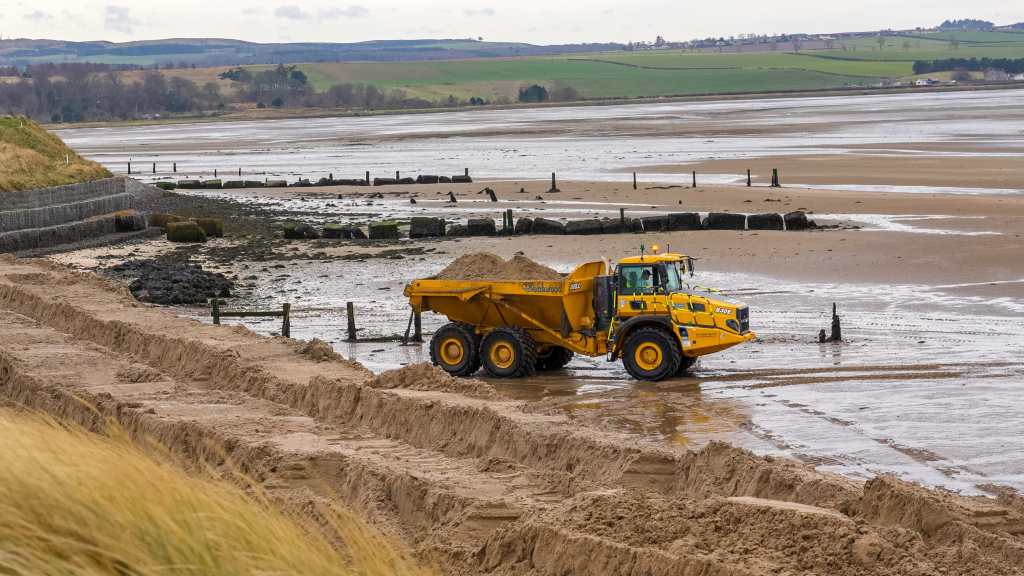
More than 28,500 tonnes of sand is being used to rebuild dunes protecting the world-famous golf courses in St Andrews due to defences retreating in recent years.
The restoration forms part of ongoing nature based and hybrid engineered coastal management activity by St Andrews Links Trust, which has seen a range of proactive steps taken to safeguard the golf courses and surrounding area.
Considered a world leader in the fight to protect links golf courses from climate driven impacts , the trust employs a dedicated team to monitor change, deliver best fit solutions and engage with all communities across their coast including the iconic West Sands beach.
The new plan puts nature-based solutions at the heart of the effort. Key works have included:
- Reviewing options and taking direct action to strengthen sand dunes at earliest risk of erosion,
- Protecting the integrity of the dune system including maintaining pedestrian access points through the dunes
- Restoring coastal grasslands to maxcimum natural health to provide a robust natural buffer zone around their soft coasts
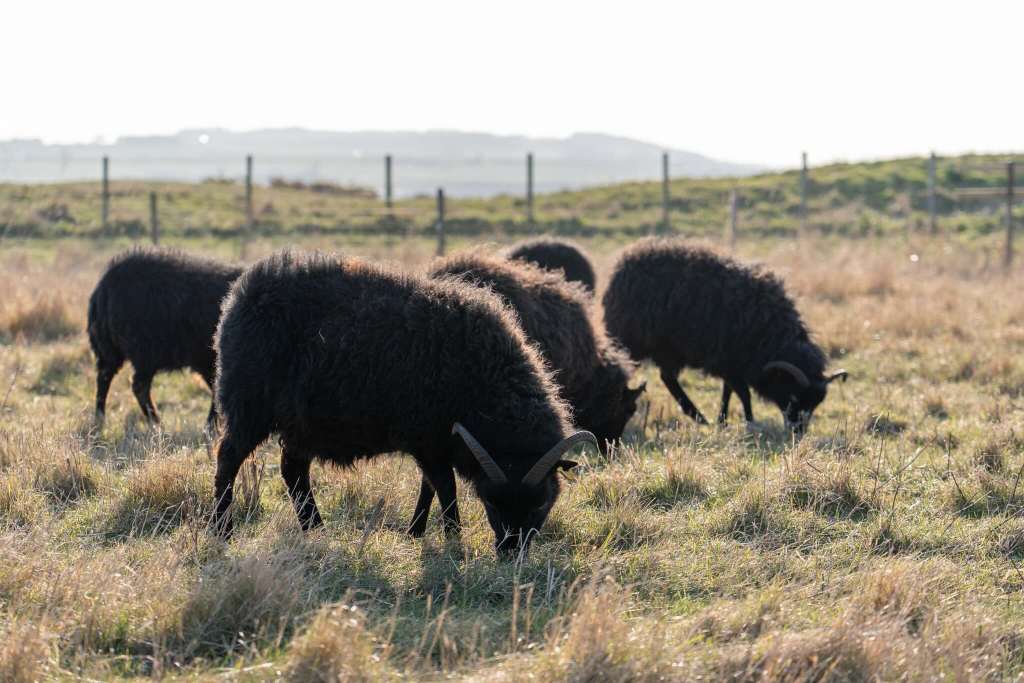
- Deploying Hebridean sheep to support coastal biodiversity
- To survey and take direct action to support coastal habitats and wildlife
- To sensitively raise land to scientifically defined heights for future protection
- Maintaining beach monitoring and non mechanised beach cleaning at West Sands,
- To actively engage with St Andrews and Fife-wide residents in their dune restorations including bringing their old Christmas trees to be thatched into support for vulnerable dunes
The sand dunes along the estuary side of the Outhead peninsula and the Jubilee course were previously restored in 2008. However, they became unstable in recent years and required additional works, particularly following storm surges during the winter of 2023/24 which were among the worst on record.
Work began in February this year to stabilise the defences and is scheduled for completion in early April. This has seen 28,500 tonnes of sand used to build a new 200m dune, which enhances what is already the biggest and longest-running dune restoration project in Scotland.
This has also restored a recognised potential flood corridor, protecting important coastal grasslands and minimising storm driven impacts on the Jubilee course grasslands.
Although this work will stabilise the sand dunes, it is accepted that this will require repetition to hold the shoreline in the future, given this project is within an active erosion zone. This project is designed to give the Links Trust time to take adaptive measures and to define a long term strategy.
The coastal plan aims to bring together the long running and highly effective restorations of sand dunes, saltmarsh, coastal land raising and habitat creation allowing for a continuation and enhancement of their stewardship both on coast and course
Neil Coulson, chief executive of St Andrews Links Trust said: “At the Home of Golf we take our responsibility as the custodians of not just the Old Course, but our other world-famous courses extremely seriously.

“That’s why we are proactively working to ensure we find solutions for problems that links courses around the world may face in the not too distant future.
“We know that coastal erosion is a challenge, but from employing our team of rangers to implementing our plan and working with others to find solutions, we are leading the way in ensuring a future for links golf.”
The West Sands Ranger Service was introduced in 2022 to manage the West Sands area and to maintain, protect and enhance the natural and cultural importance of the site.
As part of the team at St Andrews Links Trust and working closely with NatureScot, Fife Council and Fife Coast and Countryside Trust, the rangers engage and educate the local community and link with golf organisations to share best practice.
Ranald Strachan, Lead West Sands ranger, said: “Our coastal management activity is about being proactive in ensuring a sustainable future for our world-famous golf courses, but also for the surrounding communities too.

“When it comes to coastal erosion, it’s not just links courses at risk and that is why it is important that we are leading the way in St Andrews and supporting others to get ahead of issues which could cause serious problems in years to come.
“By taking a range of nature-based solutions and working with agencies in Scotland and beyond, we are using traditional and innovative approaches to safeguard this historic venue and prepare it for the future.”
Coastal erosion has been a major issue for some UK golf clubs in recent years. For example, Royal Dornoch Golf Club won an award last year for its attempts to combat it, while Tenby Golf Club has showcased its own innovative plans. Last year Fortrose and Rosemarkie Golf Club fundraised for support in its battle and several golf clubs have expressed concern for their futures over the issue with, for example, Hartlepool Golf Club submitting plans in 2022 to redevelop several holes on its course.


Leave a Reply