

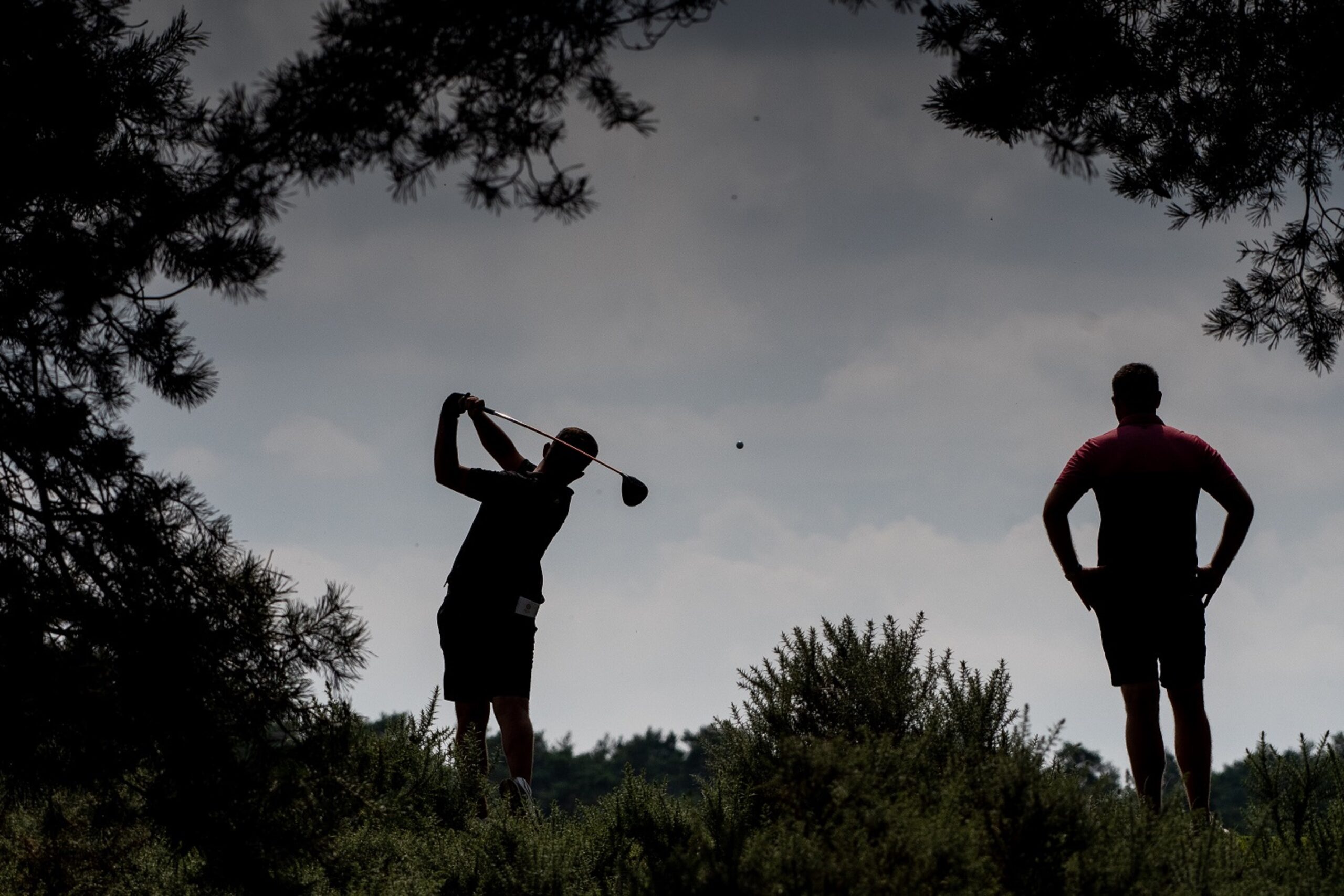
There are reports of teething problems, which were anticipated by golf’s authorities, after the new World Handicap System (WHS) was launched in the UK on Monday.
Some golfers have said they do not like the new system and there have been issues surrounding the transfer of data from clubs to centralised golf bodies, but some golfers have also praised the WHS so far.
Clearly the circumstances surrounding the launch are far from ideal, as golf clubs were closed in Wales and the Republic of Ireland at the time of the launch, and only open for three days in England, due to coronavirus restrictions.
Developed by The R&A and USGA, the WHS, for the first time, unites six handicapping bodies across the world under one standardised system.
The new system combines both the ‘Rules of Handicapping’ and the course rating system and is designed to attract more players to the game, whilst in theory making handicapping easier to understand and giving players the opportunity to use their ‘Handicap Index’ on any golf course across the globe.

It is comfortably the biggest change to handicapping in more than a century.
Every club golfer is affected by changes which mean that, when it is permissible, they can play any course in the world with the correct handicap allowance for their playing ability.
Under the new system the best eight scores from a player’s last 20 competitive rounds provides the basis of their handicap index. Separately, the difficulty of golf courses for scratch and ‘bogey’ golfers has been assessed.
This gives each course a gender specific rating, known as ‘slope index’ for each set of tees. Multiplying the handicap index by the course rating and dividing by a base measurement of 113 creates a playing handicap.
It is specific to that player on that course, wherever in the world it is located.
Further complexities abound, depending on the format that is being played (for example 95 percent of the calculated handicap for medal stroke play) but in practice this should be clearly indicated by the host clubs and competition organisers.
Furthermore, the centralised administration of the new system has drawn criticism because of concerns over data distribution.
National federations, rather than individual clubs, act as ‘calculation hubs’ with England Golf assuming responsibility for the country’s nearly 2,000 clubs. It is a similar story in Scotland, Wales and Ireland.
Some of the comments online so far suggest there has been a mixed response to its introduction.
“The WHS is a much better system overall. It’ll take something getting used to and people hate change. Especially golfers. But now playing in different countries or competing players from other parts of the world will be on the same page. Great for the game,” wrote one golfer.
Another supporter wrote: “I think this is going to have some teething problems but in the long run it’s going to make competitions much fairer and stop bandits winning all the time!”
However, comments in opposition to the new system included: “Complete waste of time. Most amateur golfers play in competitions solely at their own club having different handicaps elsewhere isn’t really necessary in my opinion.”
“What’s the point of this WHS? What a load of rubbish and a complete mess this is! I’ve been cut by 1.6 shots when I rarely shoot under my handicap as it is,” stated another.
According to the BBC, teething problems were expected.
“It really is a seismic change,” said England Gold chief executive Jeremy Tomlinson. “A huge change is that we are going to be moving from 1800 calculation hubs, which is circa the number of clubs in England, to one calculation hub now.”
The BBC states that some clubs have been reluctant to divulge information, while others have provided only generic email addresses rather than one specific to members.
If no acceptable email address is submitted, players will be denied a handicap. This is a potential problem for older golfers and young juniors who might not use the internet.
“Quite simply, we asked for unique forms of identity, an email address and a date of birth,” Tomlinson said.
“We asked for those so that we can identify 640,000 people and make sure we start off with the best possible foundation platform to ensure their golf identity really is theirs.”
Tomlinson says England Golf has already unearthed “tens of thousands of inaccuracies” during the transition period and have complied with all legal requirements regarding data protection.
“Far from it being a data grab, it’s all about identifying golfers to make sure their handicap data truly is theirs so we start the platform with the highest level of integrity,” he said.
Tomlinson is calling for patience during the transition period. “There have been problems with purifying databases,” he admitted.
“There have been issues with regards to connectivity, with regards to software. There are many queries coming through right now, so I’m just going to be real about this.
“There are going to be teething problems, but I do think we are going to get through it.”
The England Golf boss insists this uniform rating of golfers’ abilities will create a fairer game. “There won’t be little idiosyncrasies of golf clubs with their own processes, there will be one way of doing things,” Tomlinson said.
“One central calculation hub, one central library with one algorithm to calculate people’s handicaps.
“We believe it will offer a new level of integrity that people can really trust but also a wonderful way in which people can cross countries and across the world and have the ability to apply their handicap to whatever golf course they play.”
England Golf’s head of handicapping and course rating, Gemma Hunter, said: “We are confident that the new WHS will be a success throughout the country. The new system allows golfers to obtain and maintain a handicap index based on their current playing ability. In addition, it gives them the opportunity to experience even more ways to submit a score for handicap purposes and be able to play against any fellow golfer on an equitable basis and on any course around the world.”


Leave a Reply