

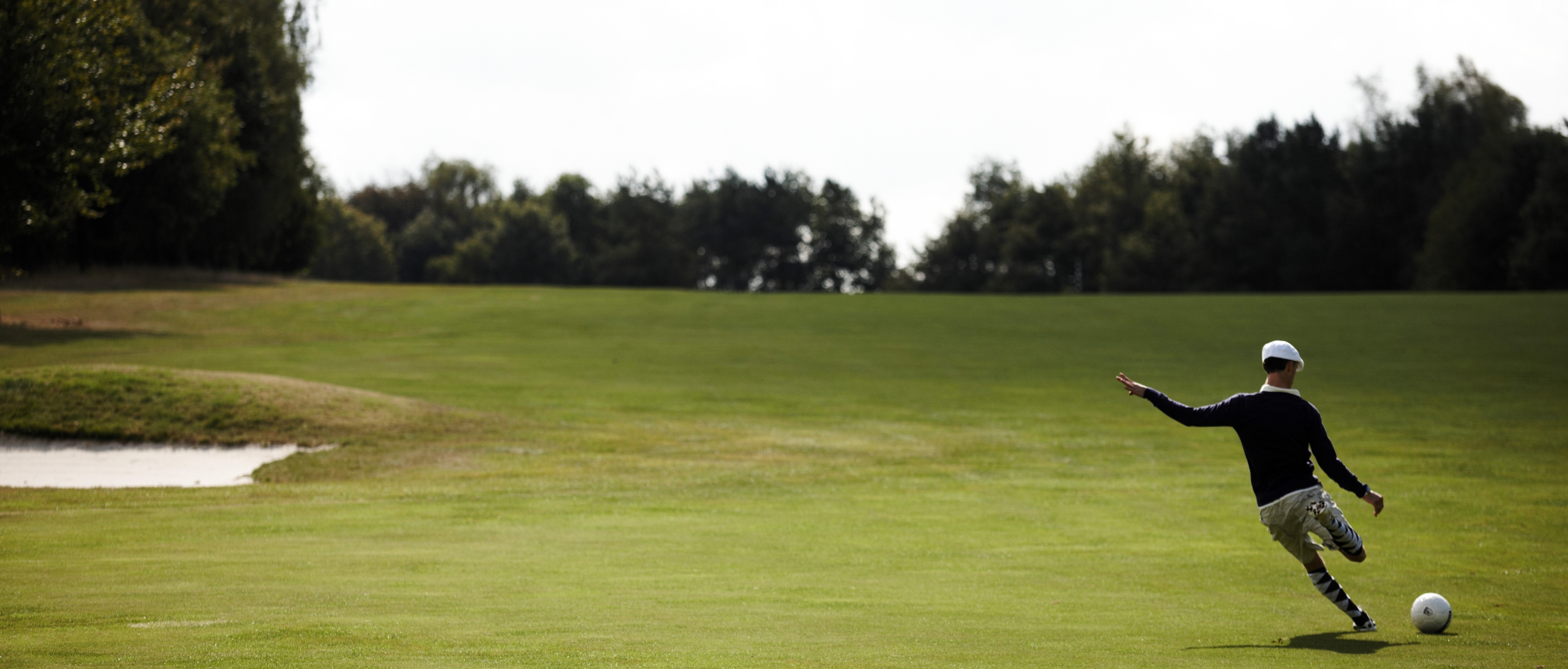
More than 150 UK golf clubs offer footgolf, the new sport that combines football and golf, even though it only came to the UK less than three years ago.
Golf clubs have to offer giant holes because the balls are footballs and not golf balls, but beyond that the UK FootGolf Association says there is minimal disruption to a venue.
“The sport which combines two of the UK’s most popular pastimes is now available in more than 160 golf courses across the UK, and shows no signs of relenting, with more than 200 certified courses predicted to be offering the sport by the summer of 2016,” said Gareth May, head of UK development at the UK FootGolf Association.
“Compared to golf, footgolf is far easier to play and with no player equipment needed, other than a football, it means that it is incredibly inclusive. Allowing mums and dads to play with the kids. Grandparents to play with grandchildren, truly anyone can play footgolf whether you are three years old or 93 years old.
“The setup cost from just £2,995 plus VAT, is small in comparison to the revenue returns available. Once setup, the footgolf course needs minimal maintenance and upkeep.
“Courses in 2015 have reported up to 300 footgolf rounds on a given day, and upwards of an additional £70,000-plus in green fee revenue, matched with significant increases in food and beverage spend.”
May added that the main demographic of a person that plays footgolf is an adult male aged 18 to 45, “so offering footgolf will help to re-invigorate a market that is sorely missing from mainstream golf,” he said. “Footgolf is also proving a hit with under 16s, with huge numbers of children playing the sport for leisure with family, with football clubs or for birthday parties.
“This can only be good for golf, as footgolf cannot exist without the ability to be played on a golf course. The sport follows the exact same rules and principal as golf, but instead of using a golf club and golf ball, the objective is to kick a standard size football in to an oversized cup. The sport needs the hazards and features of golf courses to make it interesting and challenging. The hole locations are not placed on the golf greens, and players cannot wear football boots, so in fact it creates far less damage than seen in golf.
“The type of person that would play footgolf is not your typical golfer, it is a new type of person entering the golf environment for the first time, and realising that golf clubs are an accessible environment without stigma, and that not all clubs have a strict dress code.
“Golf courses that have been operating footgolf for 12 months or more are now reporting increases in golf club memberships and are attributing this increase to the number of new people visiting their facility for the very first time, trying footgolf and then, as a consequence, trying golf later.”
May acknowledged that “not every golfer will be happy to see waves of new people visiting their golf club and kicking a ball on the fairways,” but added that “the rewards for most golf courses in terms of keeping green fees and memberships costs down, helping to keep the golf club staff employed, paying for clubhouse refurbishment or for new greenkeeping equipment to improve the golf course are now very hard to ignore.”
He also stated that this summer there were more than 30,000 people playing footgolf every week, and his association has a membership database of nearly 50,000 people on it.
“The 2015 European FootGolf Trophy Tour saw Team UK crowned as European champions for the first time – not bad considering the sport only came to the UK just three years ago. The second ever FIFG FootGolf World Cup takes place in Buenos Aires in January and UK FootGolf are sending a squad of 16 players to compete, and head out to Argentina as favourites to be crowned world champions,” he said.
The number of footgolf courses in Scotland alone is set to double, from four to eight in the next few months.
“We’ve got four courses up here just now but by next year, I think we’ll have eight,” said sales director of the UK FootGolf Association Paul Doherty. “I’m talking to two golf clubs in and around Edinburgh at the moment so I’m pretty certain by next year we’ll have at least one there, while I’m also speaking to Dundee council about two courses there and one not far from Perth.
“We get lots of golfers coming down from Perth, Dundee, even Aberdeen, to play our courses and they’re all on the west, so we definitely need some courses over on the east. They love it over there just as much as we do over here!”
“It’s also bringing to a golf club people who may have never thought about setting foot in one before and there is the hope that some of the footgolf players could then take up golf as well. It won’t be harmful anyway.
“You get some funny looks from time to time. One time when we were setting up at Hilton Park, we had a couple of golfers saying they weren’t too happy about us doing it, but you’re going to get that to begin with. It was the same at Dunoon, but I’m sure now they get three times as many footgolfers as they do golfers.
“You’re always going to get a bit of reluctance – I’ve had it while speaking to committees – and there was a club in the Borders that I spoke to who were losing £30,000 per year. I was showing them a way of how they could earn £90,000 to £100,000 per year with very little investment – but they didn’t do it.
“In Scotland, most clubs are ruled by a committee and it’s been a bit of a nightmare trying to get through to them and speak about the success we’ve had. Committees don’t want to upset their members, even if it could keep their costs down, so the majority of the clubs I speak to are privately owned as they tend to think more commercially.”


Leave a Reply to Peter Kook Cancel reply