

The current captain of the PGA, David Scott, is the general manager of Dumbarnie Links in Scotland, widely considered one of the world’s leading new courses. Here he talks about the five years since the venue opened – from Covid to course improvements this winter – and how he uses golf to help soldiers suffering with PTSD.

Dumbarnie Links has quickly become one of Scotland’s most talked-about modern courses. Its general manager, PGA captain and R&A honorary professional David Scott, speaks to The Golf Business about a career built on people, progress and the power of golf to change lives.
Since opening in 2020, Dumbarnie has established itself as one of the most notable new courses in Scotland. Set on the Balcarres Estate with sweeping views over the Firth of Forth, it has already developed a reputation for dramatic holes, first-class conditioning and a welcome that matches its ambition.
For Scott, who has overseen the project since before its launch, the key is to keep moving forward. “If you stop getting better, you stop being good,” he says. “Every year we look at how the experience can improve. That could be a hole refinement, it could be something in service, or it could just be about detail.”

That philosophy was tested immediately. When Covid hit just months before opening, the clubhouse was unfinished, and the team had to improvise. “We didn’t have toilets or a shop,” Scott recalls. “We rented portacabins, painted them all the same colour and put on a barbecue seven days a week.”
It could easily have been a false start, but the makeshift set-up gave the course character and helped Dumbarnie make a profit in its first year. Hosting the Women’s Scottish Open in 2021 provided instant credibility, rankings recognition followed, and word of mouth carried the story well beyond Fife.
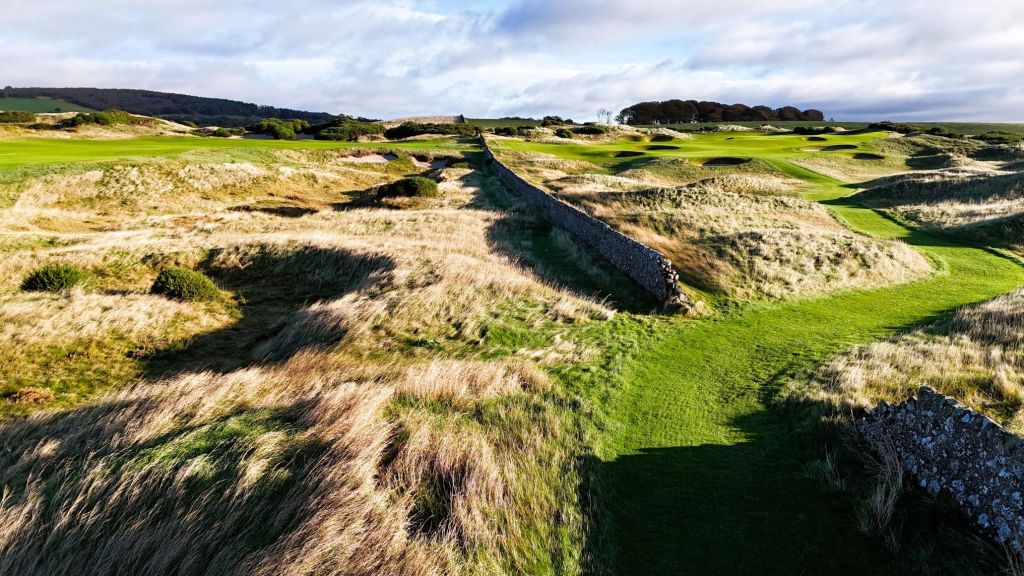
Since then, Dumbarnie’s evolution has been defined by steady improvement. The redevelopment of the 10th hole last winter, which removed a blind burn and reshaped the fairway, turned what had been regarded as the weakest hole into one of the strongest. Attention now shifts this winter to the 5th and 18th, where dunes are being lowered to restore fairness on approach shots and open up clearer sightlines.“These aren’t dramatic changes,” Scott explains. “But they make the course fairer, more enjoyable.”
The experience remains just as important as design. “From my standpoint, and feedback from guests, is very positive. We don’t drop the ball, the welcome, the food, the pace of play, the course conditioning, it’s all consistent. We’re always trying to fine-tune that little bit.”
Set across 345 acres, almost twice the size of a typical course, Dumbarnie gives golfers space to breathe. “Thirteen holes play toward the sea, and the views are stunning,” says Scott. “The fairways are generous, and most golfers leave saying it’s the most fun they’ve had.”
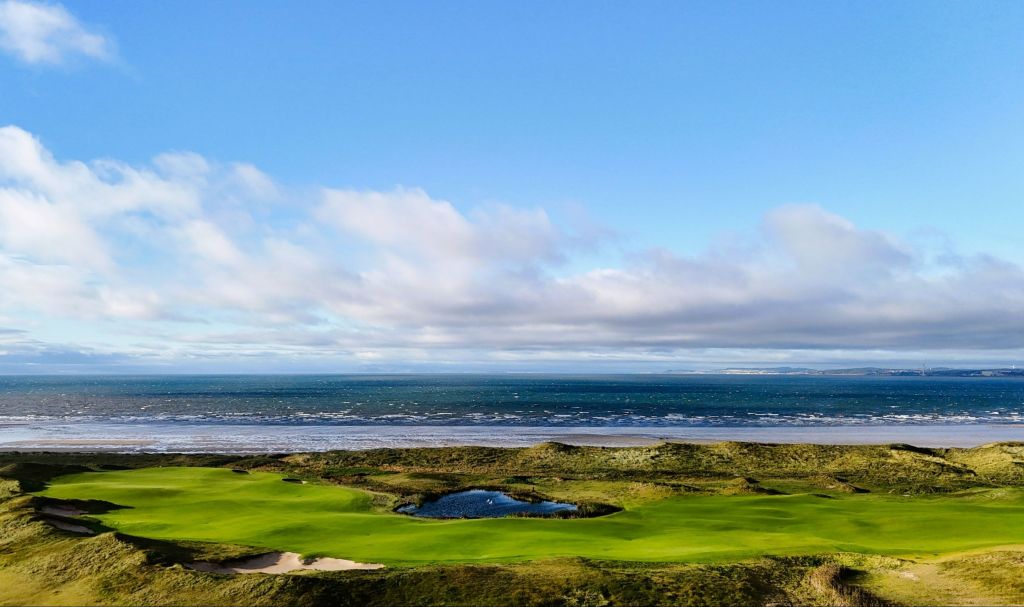
The design is built on strategy rather than punishment, with three drivable par fours and two holes featuring split fairways. “It’s about choice,” Scott adds. “Do you take the risk or play safe?”
That same ethos runs through the “Old Barn” clubhouse, which mixes rustic charm with modern comfort. With live sport on screen, country-style music and a relaxed menu, it captures Dumbarnie’s welcoming, informal character.
Scott’s perspective is shaped by a career that began almost by chance. He originally enrolled in a quantity surveying course before his mum spotted a job advert for an assistant professional, which he applied for. Within a week of starting, he knew it was what he wanted to do, three years later graduating as ‘Best Scottish Assistant’ on completing his PGA training.
Head professional roles at Letham Grange and Balbirnie Park led to a breakthrough at Kingsbarns, where he relished what he describes as a “blank sheet of paper”. He helped create a service model that introduced innovations Scotland hadn’t seen before, from first-tee pouches to distinctive US-inspired scorecards.
Later, as director of golf at the Duke’s Course and then on the Old Course Hotel executive team, Scott’s remit expanded beyond golf. “At one point I was overseeing seven areas of the business. It was quite ridiculous really, considering I left school with five standard grades.”
That scale reinforced his leadership philosophy. “I’ve always believed in working alongside the team,” he reflects. “When being promoted to director of operations at the Old Course Hotel, I wanted to understand what each area was like, and the challenges they had on a daily basis. “If housekeeping needed help, I’d spend a couple of days with them. People need to know you’re with them.”
That people-first approach remains central at Dumbarnie, where a motivated, positive-minded team underpins the whole experience.


Scott’s influence now extends well beyond his own course. Last year he became PGA captain, while also being appointed honorary professional at The R&A. “I was gobsmacked,” he says. “I grew up 250 yards away from the clubhouse. It feels like home, but I still pinch myself walking through those doors.”
He also devotes significant energy to the Caddie School for Soldiers, a charity he has supported since 2019. As president, he helps oversee three sessions a year, each lasting three and a half weeks, which bring veterans from the UK, USA and Canada to St Andrews. Almost all are dealing with PTSD; many have been medically discharged and are struggling to adjust.
“When you’re a soldier you’ve got a schedule every day. When they come back, they don’t know what to do. By training them as caddies, suddenly they’ve got structure again. And you’ve got a buddy at your side for four and a half hours. That camaraderie is powerful.”
The results can be life changing. “We’ve definitely saved lives, and we’ve saved marriages,” Scott says. “One veteran was homeless, living in his car. He’s now working here full-time and has his own flat. Another was drinking heavily, three stone overweight, close to giving up on life. Now he’s doing 200 loops a year on the Old Course and sleeping six or seven hours a night. He says himself, without the caddie school, he wouldn’t be here.”
Dumbarnie is still young in golf terms, and Scott is clear-eyed about the future. The winter works will refine playability, but the broader goal is consistency: ensuring the course, the clubhouse and the welcome all remain at the same high level.
For the industry, the message is straightforward: Dumbarnie’s progress has come not through dramatic gestures but through consistent, thoughtful steps. It is the same philosophy that has shaped David Scott’s career, from his early days as an assistant professional to leading one of Scotland’s most ambitious new courses and supporting initiatives that change lives far beyond the fairways.


Leave a Reply