

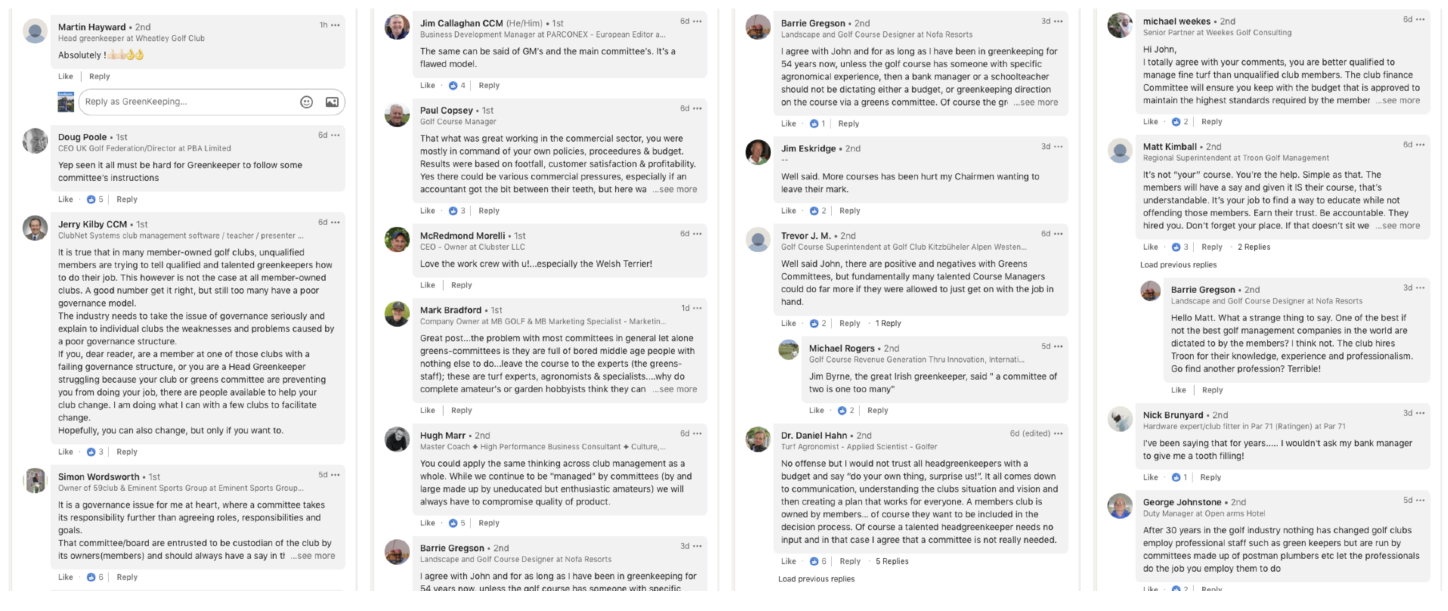
A comment by a head greenkeeper who also part-owns a golf club has sparked a major debate about whether golf clubs should have greens’ committees.
John Rowbottom, the head greenkeeper at Woolley Park Golf Club in Yorkshire, who is also a member of the family that runs the club, was asked by GreenKeeping magazine how he would improve the greenkeeping industry.
Rowbottom said: “By eradicating greens’ committees. Golf clubs around the country employ skilled individuals with the knowledge and qualifications required to look after fine turf. The biggest problem in the industry is that these qualified people are often hampered by a group of individuals who don’t know the first thing about turf. Let greenkeepers make decisions about their golf course.”
Many golf clubs in the UK have greens’ committees in which usually volunteer members who regularly play the course decide its maintenance and improvement policies. They typically operate in tandem with their club’s greenkeepers but often are not as qualified on, for example, agronomy as them.
This was posted on the magazine’s LinkedIn page and received hundreds of likes and dozens of comments, mostly from within the golf and greenkeeping industry.
The vast majority of the comments were in agreement with Rowbottom.
Some fellow head greenkeepers thanked him for speaking up, and gave examples of how courses they’d worked on had been affected by them not being given full power for their maintenance. Golf course designer Barrie Gregson said: “I agree with John and for as long as I have been in greenkeeping for 54 years now, unless the golf course has someone with specific agronomical experience, then a bank manager or a schoolteacher should not be dictating either a budget, or greenkeeping direction on the course via a greens’ committee.”
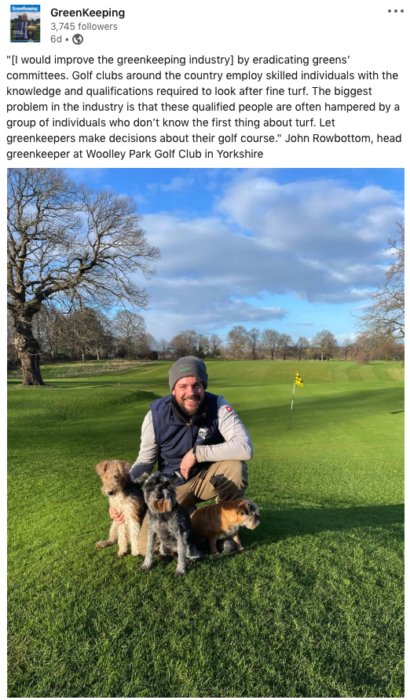
Golf course manager Paul Copsey added: “That was what was great about working in the commercial sector, you were mostly in command of your own policies, procedures and budgets. Results were based on footfall, customer satisfaction and profitability. In the end we get back to the private member club governance issues. Some are very poor, while others can be well meaning, but the club gets hijacked by an unscrupulous individual and his mates. By the time the rest of the good people at the club find out and rectify the disaster of blown cash, the loss of their best staff and managers, a destroyed course, clubhouse and struggling business, it can be too late. Golf courses are so much better when not run by golfers. It is akin to letting kids run a sweet shop.”
Others in the industry agreed with this point about governance.
Doug Poole, CEO of the UK Golf Federation, wrote: “Seen it all. Must be hard for greenkeepers to follow some committees’ instructions.” Former golf club manager Jerry Kilby CCM added: “It is true that in many member-owned golf clubs, unqualified members are trying to tell qualified and talented greenkeepers how to do their job. This however is not the case at all member-owned clubs. A good number get it right, but still too many have a poor governance model. The industry needs to take the issue of governance seriously and explain to individual clubs the weaknesses and problems caused by a poor governance structure.”
Others stated that while a greens’ committee can be a problem, if it is a good committee it should benefit the club.
PGA of America life member Tim Wilkins said: “A wise greens’ committee will be sure to hire the best candidate available … then … give that person the responsibility, the tools, the budget and the respect to let him / or her run the department, answering to the committee. The committee is the club’s liaison to the membership. The same goes for the head professional and the club manager. Micromanagement doesn’t motivate a thoroughbred … and is fear-based management. Great organisations know this to be true.”
And some replied that committees should play a role in the maintenance of a golf course, as it is their golf course. Matt Kimball, regional superintendent at Troon Golf Management, said: “It’s not ‘your’ course. You’re the help. The members will have a say and given it is their course, that’s understandable. It’s your job to find a way to educate while not offending those members. Earn their trust.”
And turf agronomist Dr Daniel Hahn stated that it could be a risk to give all head greenkeepers the freedom to do what they want. “It all comes down to communication, understanding the club’s situation and vision and then creating a plan that works for everyone. A members’ club is owned by members … of course they want to be included in the decision process,” he wrote.


Leave a Reply