

New research on how much of the UK’s land is taken up by golf courses has found that more than a tenth of the Surrey town of Woking is devoted to the sport.
At 10.74 per cent, the borough council is comfortably the most densely golf populated area in the UK.
In fact, according to Alasdair Rae, who works in the Department of Urban Studies and Planning at the University of Sheffield and conducted the research using information from Ordnance Survey, all of the UK’s top 10 towns are in southern England. Surrey dominates the list, with three of the top five authorities which have the largest percentage of golf courses all lying within the county.
The majority of Woking, which is less than 25 square miles, is green belt, with a population of less than 100,000 at the 2011 census.
Yet it is still home to West Hill Golf Club, Wisley Golf Club, Chobham Golf Club, Sutton Green Golf Club, Hoebridge Golf Centre, Worplesdon Golf Club and Woking Golf Club, among others.
Surrey itself is home to 142 golf clubs and has more land (2.65 per cent) devoted to golf courses than to housing.
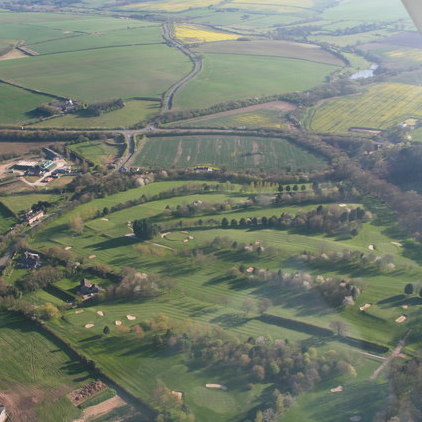
Across Britain, golf courses cover around 485 square miles, equivalent to the size of Greater Manchester or 0.54 per cent of the UK.
The 10 local authorities with the largest percentage of golf courses
Woking – 10.74%
Richmond upon Thames – 7.04%
Runnymede – 6.83%
Epsom and Ewell – 6.30%
Worthing – 6.06%
South Bucks – 5.68%
Watford – 5.61%
Croydon – 5.60%
Poole – 5.21%
The news comes as Friends of the Earth has said that golf courses take up 10 times the amount of UK land used for allotments.
The campaign group also found that golf courses receive at least £550,000 in agricultural subsidies.
Campaigner Guy Shrubsole said: “Is it really right that we devote so much space on our small island to golf courses, and so little to people trying to grow their own food?”
“Golf courses take up a vast amount of land and use huge amounts of water, yet continue to get public farm subsidies – while smallholders and allotment-owners aren’t eligible for support under the current rules.
“Public money should be spent on public goods, like protecting nature while enabling sustainable food production, rather than on private leisure activities.”
According to an FoE analysis of official figures, most of the CAP money given to golf courses – some £440,00 – was paid under the ‘agri-environment’ scheme, which would help fund tree planting and other schemes to improve the environmental quality of the land. Nearly £110,000 was paid under the ‘single farm payment’ scheme.
Under EU regulations, a golf course can qualify for basic payments under the CAP if it meets the ‘active farmer’ requirement for the land it farms. Allotments fall below the minimum requirement for CAP basic payments of five hectares.


Leave a Reply